

John Glenn Orbits Earth: First American in Orbit, Friendship 7
John Glenn completed three orbits around Earth in four hours and 55 minutes aboard Friendship 7, proving Americans could match Soviet spaceflight capabilities. This achievement galvanized public support for the Mercury program and accelerated NASA's push toward landing a man on the moon.
February 20, 1962
64 years ago
Key Figures & Places
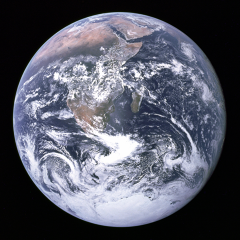
Earth
Wikipedia

Mercury program
Wikipedia
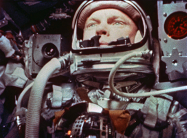
Mercury Atlas 6
Wikipedia

John Glenn
Wikipedia

Project Mercury
Wikipedia

Mercury-Atlas 6
Wikipedia

John Glenn
Wikipedia

Earth
Wikipedia

United States
Wikipedia

Enewetak Atoll
Wikipedia

Vuelo espacial
Wikipedia

Cape Canaveral Air Force Station
Wikipedia

Universo
Wikipedia

Yuri Gagarin
Wikipedia
What Else Happened on February 20
l'empereur romain Trajan reçoit du Sénat le titre de Parthicus.
fin de la bataille de Lugdunum l'actuelle ville de Lyon qui avait embrassé la cause de Clodius Albinus face à Septime Sévère.
The Visconti family was fighting itself. Lodrisio Visconti, exiled from Milan, hired the Company of St. George — 2,500 German mercenaries who'd never lost a bat…
King Christian I of Denmark and Norway pledged the Orkney and Shetland islands to Scotland as collateral for his daughter Margaret’s dowry. When he failed to pa…
King Christian I of Denmark pawned the Orkney and Shetland islands to Scotland to cover his daughter Margaret’s unpaid dowry. This desperate financial maneuver …
bataille de Hard qui oppose les Trois Ligues et les Confédérés suisses à la Ligue de Souabe et aux forces de Maximilien Ier.
Talk to History
Have a conversation with historical figures who witnessed this era. Ask questions, explore perspectives, and bring history to life.