Typewriter Patented: Sholes Launches Modern Office Revolution
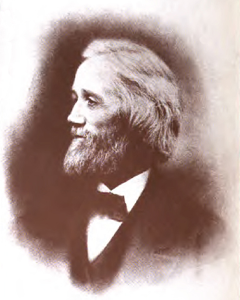
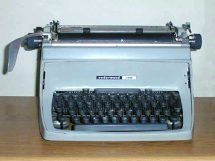
Three Wisconsin men received a patent for a machine that would fundamentally change how the world communicates. Christopher Latham Sholes, Carlos Glidden, and Samuel Soule were granted U.S. Patent No. 79,265 for their "Type-Writer" on June 23, 1868, though the device they submitted bore only a rough resemblance to what would eventually reach the market. The early prototype typed only capital letters and was so unreliable that Sholes spent the next five years redesigning it. Sholes was a newspaper editor and politician in Milwaukee who had been experimenting with mechanical printing devices since the mid-1860s. His initial goal was practical: he wanted a machine to print page numbers and address labels. Glidden, a fellow tinkerer, suggested expanding the concept to type full text. The three men built their first prototype from telegraph parts, a piano key, and a glass jar, testing it in a machine shop above a hardware store. The keyboard layout that Sholes developed during his redesign period became the most enduring element of the invention. The QWERTY arrangement, which separated commonly paired letters to prevent the mechanical typebars from jamming, was refined through trial and error and first appeared in an 1873 prototype. Sholes sold his patent rights to the Remington Arms Company, which manufactured the Sholes and Glidden Type-Writer beginning in 1874. The machine sold poorly at first, priced at $125, equivalent to roughly $3,500 today. The typewriter’s real impact was social as much as mechanical. By the 1880s, businesses began adopting the technology, and typing became one of the first white-collar professions open to women. The percentage of female clerical workers in the United States rose from 4 percent in 1880 to 77 percent by 1930, a transformation driven largely by the machine Sholes had built over a hardware store.
June 23, 1868
158 years ago
Key Figures & Places
What Else Happened on June 23
He didn't wait for permission. Sun Quan had controlled the Yangtze River delta for decades, outlasting rivals who underestimated him, watching Cao Cao die, watc…
Minamoto Yorimasa and his allies clashed with the Taira clan at the Uji River, triggering the five-year Genpei War. This struggle ended the era of imperial cour…
The Genoese showed up to Trapani with more ships. They lost every single one. The War of Saint Sabas wasn't about saints — it was about trade routes, warehouse …
Granada's outnumbered army didn't retreat. They waited. At Moclín in 1280, Emir Muhammad II let the Castilian force chase them into the narrow passes of the Sie…
Castile sent 10,000 soldiers into the mountains near Moclín expecting a straightforward campaign. They walked into a trap. Granadan forces used the brutal terra…
The Treaty of Athis-sur-Orge forced the Flemish to pay crushing war indemnities and cede key territories to the French crown following their defeat at Mons-en-P…
Talk to History
Have a conversation with historical figures who witnessed this era. Ask questions, explore perspectives, and bring history to life.