

British Warship Attacks USS Chesapeake: War Tensions Rise
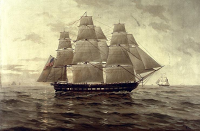
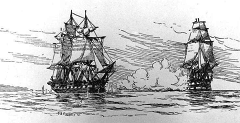
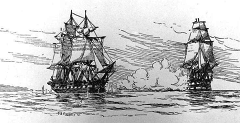
Three broadsides ripped into an unprepared American frigate, and the young republic nearly went to war with the most powerful navy on Earth. On June 22, 1807, HMS Leopard intercepted USS Chesapeake off the Virginia coast and demanded to search the ship for British deserters. When Commodore James Barron refused, the British warship opened fire at point-blank range, killing three American sailors and wounding eighteen more in a barrage lasting roughly fifteen minutes. The Chesapeake was in no condition to fight. The ship had just departed Norfolk and was still stowing gear; its guns were not loaded, and the decks were cluttered with supplies and personal belongings. Barron struck his colors after managing to fire only a single gun in response. A British boarding party then removed four men they identified as deserters, though only one was actually a British subject. The other three were Americans who had previously been impressed into Royal Navy service. The attack provoked an explosion of public anger across the United States. President Jefferson could have had a declaration of war from Congress within days. Instead, he chose economic pressure, eventually signing the Embargo Act of 1807, which banned virtually all American foreign trade. The embargo devastated the American economy, particularly in New England, without meaningfully changing British behavior. Jefferson later called it the greatest mistake of his presidency. The Chesapeake affair exposed the central grievance that would drive the United States into the War of 1812 five years later: the British practice of impressment, forcibly seizing sailors from American ships to serve in the Royal Navy. Britain did not formally apologize for the Leopard’s attack until 1811, and by then, the accumulation of maritime insults had made war all but inevitable.
June 22, 1807
219 years ago
Key Figures & Places


What Else Happened on June 22
Ptolemy IV deployed 20,000 native Egyptian soldiers alongside his Greek troops to defeat Antiochus III's larger Seleucid army at Raphia, preserving Egyptian con…
Perseus had 44,000 men and the most feared infantry formation in the ancient world — the Macedonian phalanx. He lost anyway, in about an hour. Aemilius Paullus …
Bishops gathered in Ephesus to condemn Nestorius, formalizing the doctrine that Mary should be venerated as Theotokos, or Mother of God. This theological ruling…
Krum didn't just win a battle at Versinikia — he humiliated an empire. The Bulgarian khan smashed Michael I's forces so completely near Edirne that Michael went…
The Hungarians weren't supposed to win. They'd been raiding deep into Frankish territory for years — fast, mounted, terrifying — and the East Franks finally sen…
Fatahillah drove Portuguese forces from the port of Sunda Kelapa, renaming the settlement Jayakarta to celebrate his victory. This decisive expulsion ended Euro…
Talk to History
Have a conversation with historical figures who witnessed this era. Ask questions, explore perspectives, and bring history to life.