

Byron's Ghost Challenge: Frankenstein Born at Villa Diodati
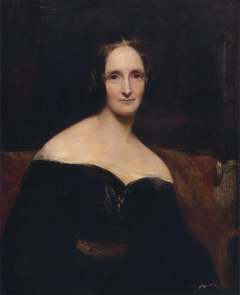
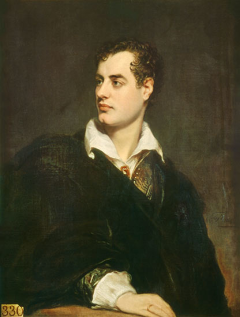
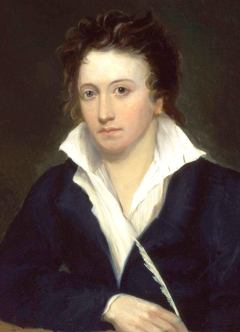
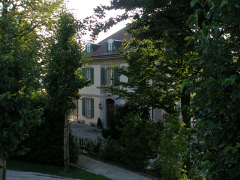
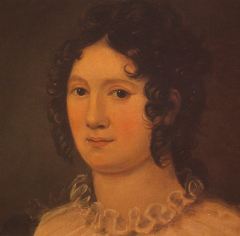
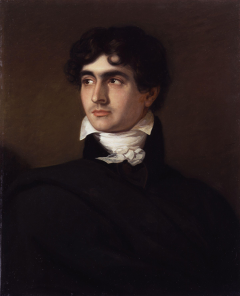
Lord Byron read ghost stories aloud from the French anthology Fantasmagoriana to his guests at the Villa Diodati on Lake Geneva during the unseasonably cold, rain-drenched summer of 1816, then challenged each person present to write their own supernatural tale. The gathering included Percy Bysshe Shelley, his future wife Mary Godwin (later Mary Shelley), Byron's personal physician John Polidori, and Claire Clairmont. That evening's literary dare produced two works that invented entirely new genres of fiction. The summer of 1816 was abnormally frigid across the Northern Hemisphere, a consequence of the April 1815 eruption of Mount Tambora in Indonesia, which had ejected enormous quantities of sulfur dioxide into the stratosphere. The resulting climate disruption produced what became known as the "Year Without a Summer." Temperatures dropped, crops failed across Europe, and the weather at Lake Geneva was so relentlessly dismal that Byron's houseguests spent most of their time indoors. Mary Godwin, eighteen years old and not yet married to Shelley, initially struggled with the challenge. She later described lying awake and experiencing a waking nightmare of "the pale student of unhallowed arts kneeling beside the thing he had put together." That vision became the opening of Frankenstein; or, The Modern Prometheus, published anonymously in 1818, which is now widely considered the first science fiction novel. The book explored themes of scientific responsibility, creation, and monstrosity that remain central to the genre two centuries later. Polidori produced The Vampyre, published in 1819 and initially misattributed to Byron. The story established the template for the aristocratic, seductive vampire that dominated Gothic fiction for the next century and directly influenced Bram Stoker's Dracula in 1897. Byron himself never finished his contribution.
June 16, 1816
210 years ago
Key Figures & Places
What Else Happened on June 16
Julian burned his own ships. Not the enemy's — his own 1,100-vessel supply fleet, torched on the Tigris because advisors convinced him they couldn't defend it d…
Yazdegerd III ascended the Sasanian throne at just eight years old, inheriting a Persian Empire already fractured by civil war and plague. His reign coincided w…
Father and son, both kings, both captured on the same day. Hồ Quý Ly had seized Vietnam's throne in 1400 by forcing out the Trần dynasty after centuries of rule…
Ten-year-old Lambert Simnel was crowned King of England in Dublin — a baker's son, coached by a priest, dressed in borrowed robes. Henry VII's army met the York…
The last battle of the Wars of the Roses wasn't Bosworth. Most people think it was. But two years after Richard III died in a ditch, a ten-year-old boy named La…
Mary, Queen of Scots, disinherited her Protestant son, James VI, and formally named Philip II of Spain as her successor to the English throne. This desperate ga…
Talk to History
Have a conversation with historical figures who witnessed this era. Ask questions, explore perspectives, and bring history to life.