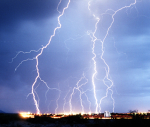
Franklin Flies Kite: Lightning Proven as Electricity
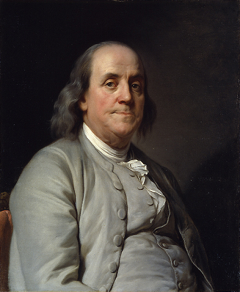
Benjamin Franklin flew a kite into a thunderstorm sometime in June 1752, probably near Philadelphia, and demonstrated that lightning was electrical in nature. The exact date is unknown, and some historians have questioned whether the experiment happened as traditionally described. Franklin himself did not publish an account until October 1752, in the Pennsylvania Gazette, and the description was notably brief for so dramatic a discovery. No witnesses are named. Franklin had proposed the experiment theoretically in 1750, suggesting that a metal rod placed atop a tall structure could draw electrical charge from storm clouds. French scientists Thomas-Francois Dalibard and Louis-Guillaume Le Monnier successfully performed this "sentry box" experiment in May 1752, confirming Franklin's hypothesis before he conducted his own test. Franklin may not have known about the French results when he flew his kite. The traditional account describes Franklin and his son William flying a silk kite with a metal key attached to the string during a thunderstorm. When Franklin brought his knuckle near the key, he observed a spark, proving that the storm cloud carried an electrical charge. The experiment was extraordinarily dangerous. Georg Wilhelm Richmann, a Swedish physicist working in St. Petersburg, was killed in 1753 while attempting to replicate it, struck by ball lightning that traveled down his experimental apparatus. Franklin's work on electricity had immediate practical consequences. He invented the lightning rod, which was rapidly adopted across Europe and America and saved countless buildings from fire. His electrical research also earned him the Royal Society's Copley Medal and made him the most famous American scientist in Europe, a reputation that proved invaluable when he later served as ambassador to France during the American Revolution.
June 15, 1752
274 years ago
Key Figures & Places
What Else Happened on June 15
Assyrian astronomers recorded a total solar eclipse on June 15, 763 BC, noting the event in the limmu lists of King Ashur-dan III. This precise observation prov…
Pope Sergius II anointed Louis II as King of Italy in Rome, formalizing the Carolingian grip on the Italian peninsula. This coronation solidified the alliance b…
Robert I won the battle and still lost everything. He defeated Charles the Simple's forces at Soissons in 923, then took an arrow or sword blow — accounts disag…
The fleet that decided Norway's future wasn't won by numbers — Sverre's Birkebeiner force was massively outnumbered. But Sverre had a trick: he rammed Magnus's …
King Magnus V fell in the freezing waters of Sognefjord during the Battle of Fimreite, ending his long struggle for the Norwegian throne. His defeat cleared the…
King John affixed his seal to the Magna Carta at Runnymede, bowing to pressure from rebellious barons to curb his absolute power. This charter established the p…
Talk to History
Have a conversation with historical figures who witnessed this era. Ask questions, explore perspectives, and bring history to life.