Helsinki Founded: Sweden's Trading Post Against Hanseatic League
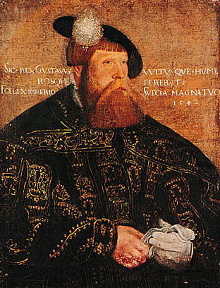
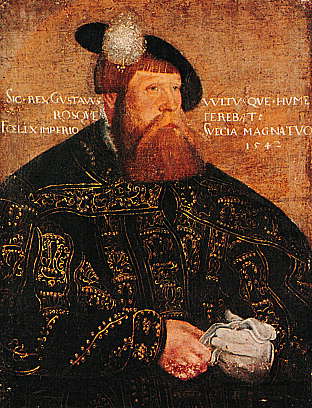
King Gustav I of Sweden issued a decree on June 12, 1550, ordering burghers from the towns of Rauma, Ulvila, Porvoo, and Tammisaari to relocate to a new trading settlement at the mouth of the Vantaa River. The king named it Helsingfors and intended it as a rival to Tallinn, the prosperous Hanseatic trading city across the Gulf of Finland that controlled much of Baltic commerce. The ambition outstripped the reality. The new town attracted few settlers and struggled for decades. Gustav I's strategy was economic warfare. The Hanseatic League, a confederation of merchant guilds and market towns across Northern Europe, had maintained a near-monopoly on Baltic trade for centuries. Tallinn (then called Reval) served as a key node in this network. By establishing a Swedish-controlled port directly across the gulf, Gustav hoped to divert trade and tax revenue. The plan required enough merchants to make the port viable, which is why he ordered forced relocations from established towns. Helsinki's first century was difficult. The site at the river mouth proved poorly suited to larger ships, the harbor was shallow, and the small population suffered from plague outbreaks. The town was relocated in 1640 to a more favorable position at the current location near Vironniemi. Even after the move, Helsinki remained a minor town compared to Turku, the regional capital, for another century and a half. Helsinki's transformation began when Russia conquered Finland from Sweden in 1809. Tsar Alexander I made Helsinki the capital of the new Grand Duchy of Finland in 1812, preferring it over Turku because of its proximity to St. Petersburg. Today Helsinki is home to roughly 1.3 million people in its metropolitan area and serves as the capital of an independent Finland.
June 12, 1550
476 years ago
Key Figures & Places

What Else Happened on June 12
The Hungarians were running away. That's what Louis the Child's army thought. They chased the retreating Magyar horsemen straight into a trap — and the East Fra…
Qutb ud-Din Aibak established the Delhi Sultanate after the assassination of his predecessor, Muhammad Ghori, shifting the center of Islamic political power fro…
A Christian monk walked into a debate he was guaranteed to win. Nicholas Donin had converted from Judaism and handed the Church a list of 35 charges against the…
Thousands of armed peasants converged on Blackheath, demanding an end to serfdom and the abolition of poll taxes that crippled the rural poor. This massive mobi…
The prisoners never had a chance. On a single night in 1418, Parisian mobs tore through the city targeting anyone connected to Bernard VII, Count of Armagnac — …
The gates of Paris swung open from the inside. That's the part people miss — nobody stormed the city. A group of Burgundian sympathizers, led by agents of John …
Talk to History
Have a conversation with historical figures who witnessed this era. Ask questions, explore perspectives, and bring history to life.