

Feminine Mystique Published: Friedan Reawakens Feminism
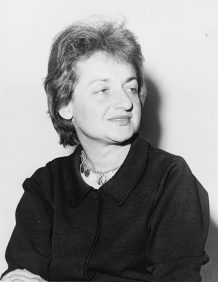
Betty Friedan spent five years interviewing her Smith College classmates and discovered that the most privileged women in America were quietly going insane. The Feminine Mystique, published on February 19, 1963, put a name to "the problem that has no name" — the suffocating dissatisfaction of educated suburban housewives who had been told that domestic life was the only path to female fulfillment. The book sold three million copies, reawakened American feminism after a forty-year dormancy, and ignited the second wave of the women’s movement. Friedan was a 1942 Smith graduate who had given up a journalism career to raise three children in a Rockland County suburb. In 1957, she designed a questionnaire for her fifteen-year reunion asking classmates about their lives. The responses shocked her. These women had college degrees, comfortable homes, healthy children, and attentive husbands. They also reported persistent anxiety, depression, and a sense of emptiness they could not articulate. Doctors prescribed tranquilizers. Women’s magazines told them to find fulfillment in shinier floors and better casseroles. Friedan argued that American consumer culture and Freudian psychology had collaborated to create an ideology — the "feminine mystique" — that defined women exclusively through their roles as wives and mothers. She documented how women’s magazines, advertisers, educators, and psychologists had systematically encouraged women to abandon professional ambitions in favor of domesticity, then pathologized the unhappiness that resulted. The book drew on sociology, psychology, and hundreds of interviews to build its case. The impact was immediate and explosive. Women wrote to Friedan by the thousands, describing their own versions of the problem. Critics accused her of undermining the family. Friedan helped found the National Organization for Women in 1966 and became a leading voice for equal pay, reproductive rights, and workplace equality. The Feminine Mystique is widely credited with launching the legislative and cultural revolution that transformed women’s lives over the following decades. A survey questionnaire sent to suburban housewives became a manifesto that told millions of women the emptiness they felt was not a personal failure but a political condition — and political conditions can be changed.
February 19, 1963
63 years ago
Key Figures & Places



What Else Happened on February 19
Septimius Severus and Clodius Albinus each brought approximately 150,000 soldiers to the field at Lugdunum (modern Lyon, France) in February 197 AD, producing t…
Constantius II ordered every pagan temple in the Roman Empire shut in 356. Not destroyed — closed. The difference mattered. Priests couldn't perform sacrifices.…
Constantius II banned pagan worship in 356, but he couldn't ban the temples themselves. Too many. Too expensive to destroy. So Romans kept visiting them — not t…
Boniface III waited eight months to become pope. The longest gap between popes in the church's first thousand years. He needed approval from Constantinople — th…
Sigismund III of the House of Vasa was crowned King of Sweden on February 19, 1594, making him the only person in European history to simultaneously rule both S…
Huaynaputina erupted with such force in 1600 that it ejected enough ash to bury nearby villages and trigger a global volcanic winter. The resulting drop in temp…
Talk to History
Have a conversation with historical figures who witnessed this era. Ask questions, explore perspectives, and bring history to life.