

Marines Land on Iwo Jima: Fierce Battle Begins
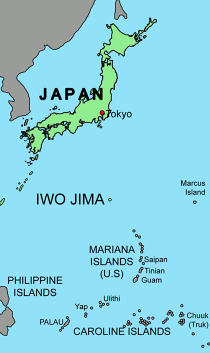
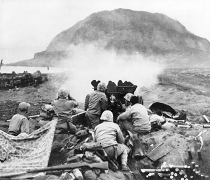
Thirty thousand Marines stormed the black volcanic beaches of Iwo Jima on February 19, 1945, and within minutes discovered they had landed in a killing field. The sand was so soft that tracked vehicles bogged down immediately. Japanese defenders, entrenched in 11 miles of tunnels carved into volcanic rock, held their fire until the beaches were packed with men and equipment, then opened up with mortars, artillery, and machine guns from Mount Suribachi and the surrounding highlands. The 36-day battle that followed produced the highest casualty rate of any Marine operation in the Pacific war. Iwo Jima was a tiny island, eight square miles of sulfurous volcanic rock roughly 750 miles south of Tokyo. It mattered because of its three airfields. Japanese fighters based there intercepted B-29 bombers flying from the Marianas to bomb the Japanese mainland, and the island served as an early warning station that gave Tokyo two hours notice of incoming raids. American planners calculated that capturing Iwo Jima would save more airmen’s lives than the invasion would cost in ground troops. The calculation proved wrong. General Tadamichi Kuribayashi had spent months preparing the island’s defense, abandoning the traditional Japanese strategy of fighting at the waterline. Instead, he built a fortress underground: interconnected bunkers, tunnels with multiple exits, concealed artillery positions, and natural caves reinforced with concrete. His 21,000 defenders were ordered to fight to the death and take ten Americans with them. The fighting was close, brutal, and relentless. Marines advanced yard by yard, clearing bunkers with flamethrowers and demolition charges. The iconic flag-raising on Mount Suribachi on February 23, photographed by Joe Rosenthal, suggested the battle was nearly won. It was not even close — the fighting continued for another month. When the island was declared secure on March 26, nearly 7,000 Americans were dead and 20,000 wounded. Of the 21,000 Japanese defenders, only 216 survived. Twenty-seven Medals of Honor were awarded for Iwo Jima, more than for any other single battle in American history — a measure of both extraordinary courage and extraordinary cost.
February 19, 1945
81 years ago
Key Figures & Places


What Else Happened on February 19
Septimius Severus and Clodius Albinus each brought approximately 150,000 soldiers to the field at Lugdunum (modern Lyon, France) in February 197 AD, producing t…
Constantius II ordered every pagan temple in the Roman Empire shut in 356. Not destroyed — closed. The difference mattered. Priests couldn't perform sacrifices.…
Constantius II banned pagan worship in 356, but he couldn't ban the temples themselves. Too many. Too expensive to destroy. So Romans kept visiting them — not t…
Boniface III waited eight months to become pope. The longest gap between popes in the church's first thousand years. He needed approval from Constantinople — th…
Sigismund III of the House of Vasa was crowned King of Sweden on February 19, 1594, making him the only person in European history to simultaneously rule both S…
Huaynaputina erupted with such force in 1600 that it ejected enough ash to bury nearby villages and trigger a global volcanic winter. The resulting drop in temp…
Talk to History
Have a conversation with historical figures who witnessed this era. Ask questions, explore perspectives, and bring history to life.