Japanese Americans Interned: Rights Stripped by Fear
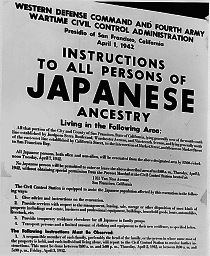
With a stroke of a pen on February 19, 1942, President Franklin D. Roosevelt authorized the forced removal of over 110,000 people from their homes, businesses, and communities based on nothing more than their ancestry. Executive Order 9066 gave military commanders the power to designate "military areas" and exclude anyone they chose. The order never mentioned Japanese Americans by name. It did not need to — everyone understood who it targeted. The attack on Pearl Harbor on December 7, 1941, unleashed a wave of anti-Japanese hysteria along the West Coast. Newspapers ran headlines about Japanese saboteurs. Politicians demanded action. Lieutenant General John DeWitt, commanding the Western Defense Command, declared that "the Japanese race is an enemy race" and that the absence of any sabotage was itself proof of a coordinated plan to strike later. No evidence of espionage or sabotage by Japanese Americans was ever produced, and FBI Director J. Edgar Hoover privately called the military’s case weak. Roosevelt signed the order anyway. Beginning in March 1942, Japanese Americans were given days to dispose of their property, businesses, and possessions before reporting to assembly centers — often converted racetracks and fairgrounds — then transported to ten permanent internment camps in remote, inhospitable locations from the California desert to the swamps of Arkansas. Families lived in tar-paper barracks behind barbed wire, guarded by armed soldiers. Two-thirds of the internees were American citizens, many of them children. The internment continued until January 1945. The Supreme Court upheld the constitutionality of the order in Korematsu v. United States (1944), a decision that stood for 74 years before being repudiated by the Court in 2018. In 1988, President Reagan signed the Civil Liberties Act, formally apologizing and providing $20,000 in reparations to each surviving internee. Congress acknowledged that the internment was motivated by "race prejudice, war hysteria, and a failure of political leadership." Executive Order 9066 remains the most sweeping violation of civil liberties in modern American history, a reminder that constitutional rights are only as strong as the willingness to defend them when fear demands their suspension.
February 19, 1942
84 years ago
Key Figures & Places
What Else Happened on February 19
Septimius Severus and Clodius Albinus each brought approximately 150,000 soldiers to the field at Lugdunum (modern Lyon, France) in February 197 AD, producing t…
Constantius II ordered every pagan temple in the Roman Empire shut in 356. Not destroyed — closed. The difference mattered. Priests couldn't perform sacrifices.…
Constantius II banned pagan worship in 356, but he couldn't ban the temples themselves. Too many. Too expensive to destroy. So Romans kept visiting them — not t…
Boniface III waited eight months to become pope. The longest gap between popes in the church's first thousand years. He needed approval from Constantinople — th…
Sigismund III of the House of Vasa was crowned King of Sweden on February 19, 1594, making him the only person in European history to simultaneously rule both S…
Huaynaputina erupted with such force in 1600 that it ejected enough ash to bury nearby villages and trigger a global volcanic winter. The resulting drop in temp…
Talk to History
Have a conversation with historical figures who witnessed this era. Ask questions, explore perspectives, and bring history to life.