Midway Turns Pacific: US Decimates Japanese Fleet
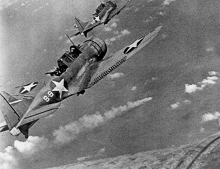
American codebreakers won the Battle of Midway before the first torpedo was launched. Lieutenant Commander Joseph Rochefort and his team at Station Hypo in Hawaii cracked enough of the Japanese JN-25 naval cipher to determine that Admiral Yamamoto Isoroku planned to attack Midway Atoll in early June 1942. Rochefort even identified the date and the direction of the Japanese approach. Armed with this intelligence, Admiral Chester Nimitz positioned three aircraft carriers northeast of Midway and waited. The Japanese fleet that sortied toward Midway was the most powerful naval force ever assembled in the Pacific: four fleet carriers, two battleships, three cruisers, and dozens of support ships under Vice Admiral Nagumo Chuichi. Yamamoto’s plan called for a diversionary attack on the Aleutian Islands, followed by an invasion of Midway that would draw the U.S. Pacific Fleet into a decisive engagement. The plan assumed surprise. Thanks to Rochefort, the Americans had it instead. The battle unfolded on June 4-7, 1942, and its turning point lasted five minutes. Three waves of American torpedo bombers attacked the Japanese carriers and were virtually annihilated, with Torpedo Squadron 8 losing all fifteen aircraft and all but one of its thirty pilots. But the doomed torpedo runs pulled Japanese fighter cover down to sea level and disorganized the carriers’ flight decks, which were loaded with armed and fueled aircraft. At 10:22 AM, dive bombers from the USS Enterprise and Yorktown arrived overhead virtually unopposed. In five minutes, they put fatal hits on three of the four Japanese carriers: Kaga, Akagi, and Soryu. The fourth, Hiryu, launched a counterstrike that crippled the Yorktown before it too was sunk that afternoon. Japan lost four fleet carriers, a heavy cruiser, 248 aircraft, and over 3,000 men. The United States lost one carrier, a destroyer, 150 aircraft, and 307 men. The Japanese carrier fleet never recovered. Midway did not end the Pacific War, which would grind on for three more years through Guadalcanal, Iwo Jima, and Okinawa. But after June 7, 1942, the strategic initiative belonged to the United States, and Japan fought a defensive war it could not win.
June 7, 1942
84 years ago
Key Figures & Places
What Else Happened on June 7
She was a pagan poet's daughter from Athens — and she almost didn't make it to Constantinople at all. Theodosius II's sister Pulcheria, who effectively ran the …
Pope John VIII officially recognized Duke Branimir’s rule, granting Croatia formal status as an independent state. By securing this papal blessing, Branimir suc…
Henry II ascended the German throne, consolidating power after the sudden death of his cousin, Emperor Otto III. By securing the loyalty of the German nobility,…
The city hadn't had rain in weeks. Crusader soldiers were dying of thirst outside Jerusalem's walls in the summer of 1099, some drinking their own horses' blood…
The First Crusade's siege of Jerusalem began on June 7, 1099, with barely 1,500 knights and 12,000 foot soldiers remaining from the original force of approximat…
Friuli had outlasted Rome's collapse, survived barbarian migrations, and held itself together for centuries under the Patriarch of Aquileia. Then Venice sent tr…
Talk to History
Have a conversation with historical figures who witnessed this era. Ask questions, explore perspectives, and bring history to life.