

Egypt's Revolution: Civil Disobedience Defies British Rule
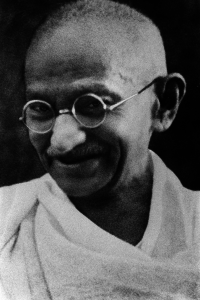
A 23-year-old Indian lawyer was thrown off a first-class train car in Pietermaritzburg, South Africa, on June 7, 1893, because a white passenger objected to sharing the compartment with a non-white person. Mohandas Gandhi had a valid first-class ticket. The conductor told him to move to the van compartment. Gandhi refused. A constable pushed him off the train at the next station, and he spent the night shivering on a bench in the waiting room, too proud to retrieve his luggage from the baggage claim. Gandhi had arrived in South Africa weeks earlier to handle a civil lawsuit for a Muslim Indian trading firm. He planned to stay for a year. The Pietermaritzburg incident, and the systematic racial discrimination he encountered throughout Natal and the Transvaal, transformed a shy, unsuccessful barrister into a political activist. Gandhi spent the next twenty-one years in South Africa, developing the philosophy of satyagraha, or nonviolent resistance, through campaigns against discriminatory laws targeting the Indian community. Satyagraha was not passivity. Gandhi organized strikes, marches, and mass civil disobedience that deliberately provoked arrest and imprisonment. The strategy depended on the willingness of protesters to accept suffering without retaliation, exposing the moral bankruptcy of the oppressor to public scrutiny. The method required extraordinary discipline and produced results that were neither quick nor guaranteed. Gandhi’s South African campaigns won modest legal reforms, but the racial structures of the colony remained intact. Gandhi returned to India in 1915 and applied satyagraha on a national scale against British colonial rule. The Salt March of 1930, the Quit India movement of 1942, and decades of organized noncooperation eventually made British India ungovernable. Indian independence came in 1947, though accompanied by the partition violence Gandhi had spent his life trying to prevent. The train platform in Pietermaritzburg, where a young man decided that injustice must be confronted rather than endured, became the origin point for a method of resistance adopted by Martin Luther King Jr., Nelson Mandela, and liberation movements across the world.
June 7, 1893
133 years ago
Key Figures & Places
What Else Happened on June 7
She was a pagan poet's daughter from Athens — and she almost didn't make it to Constantinople at all. Theodosius II's sister Pulcheria, who effectively ran the …
Pope John VIII officially recognized Duke Branimir’s rule, granting Croatia formal status as an independent state. By securing this papal blessing, Branimir suc…
Henry II ascended the German throne, consolidating power after the sudden death of his cousin, Emperor Otto III. By securing the loyalty of the German nobility,…
The city hadn't had rain in weeks. Crusader soldiers were dying of thirst outside Jerusalem's walls in the summer of 1099, some drinking their own horses' blood…
The First Crusade's siege of Jerusalem began on June 7, 1099, with barely 1,500 knights and 12,000 foot soldiers remaining from the original force of approximat…
Friuli had outlasted Rome's collapse, survived barbarian migrations, and held itself together for centuries under the Patriarch of Aquileia. Then Venice sent tr…
Talk to History
Have a conversation with historical figures who witnessed this era. Ask questions, explore perspectives, and bring history to life.