

Charles II Restored: The English Monarchy Returns After Cromwell
Charles II stepped back onto the throne of England, Scotland, and Ireland in 1660, ending a decade of republican rule and restoring the monarchy. This immediate return of royal authority dissolved the Commonwealth government and re-established the Church of England's dominance over religious life.
May 29, 1660
366 years ago
Key Figures & Places

Scotland
Wikipedia
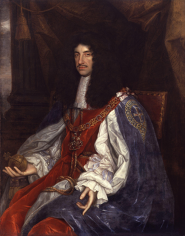
Charles II of England
Wikipedia
England
Wikipedia

Ireland
Wikipedia
English Restoration
Wikipedia

Restoration of the British monarchy
Wikipedia

Charles II of England
Wikipedia
England
Wikipedia
Scotland
Wikipedia

Ireland
Wikipedia

British
Wikipedia
Monarchy
Wikipedia

Great Britain
Wikipedia
1660
Wikipedia

1859
Wikipedia

University
Wikipedia

University of Oxford
Wikipedia

University of Cambridge
Wikipedia

River Thames
Wikipedia

Putney Bridge
Wikipedia

The Boat Race
Wikipedia

Geschichte Englands
Wikipedia

1685
Wikipedia

Palestine (region)
Wikipedia

Arabs
Wikipedia

إيمان عياد
Wikipedia
What Else Happened on May 29

Emperor Julian's legions defeated the Sassanid army beneath the walls of Ctesiphon, the Persian capital, but found the city's massive fortifications impregnable…
en Roma, Pablo I sucede a Esteban II como papa.
Almoravid forces under Tamim ibn Yusuf annihilated a Castilian army at Ucles, killing Prince Sancho, the only legitimate heir of King Alfonso VI. The defeat sha…
Der Gegenpapst Viktor IV. verzichtet wenige Wochen nach seiner Wahl im Januar auf das Papstamt. Die Intervention Bernhards von Clairvaux hat diese Entscheidung …
Mit dem Kloster Balamand in der Grafschaft Tripolis errichten die Zisterzienser ihre erste Abtei außerhalb Europas.

Imperial forces under Christian of Buch and Rainald of Dassel destroyed a Roman army supporting Pope Alexander III at Monte Porzio, killing thousands of Romans …
Talk to History
Have a conversation with historical figures who witnessed this era. Ask questions, explore perspectives, and bring history to life.