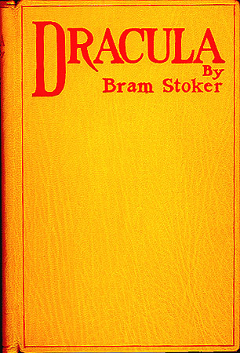
Dracula Rises: Stoker Defines Vampire Literature Forever
A theater manager who had never published a novel released a book about a Transylvanian count, and the vampire as the world knows it was born. Bram Stoker published Dracula on May 26, 1897, after seven years of research and writing, and the novel redefined an ancient folklore figure into the suave, seductive predator that has dominated horror fiction and cinema for over a century. Stoker managed London's Lyceum Theatre for the actor Henry Irving, a demanding job that left writing time scarce. He spent years researching Eastern European folklore, geography, and history, drawing on works like Emily Gerard's essays on Transylvanian superstition and consulting notes on Wallachian prince Vlad III. The novel took shape through extensive handwritten notes that survive at the Rosenbach Museum in Philadelphia. Dracula was published by Archibald Constable in London and received mixed reviews. The Athenaeum called it sensational. The Daily Mail praised it. Sales were steady but not spectacular during Stoker's lifetime. He earned a comfortable living from the Lyceum, not from the novel, and died in 1912 without realizing what he had created. The character's transformation into a global icon began with F.W. Murnau's unauthorized 1922 film Nosferatu and accelerated with Bela Lugosi's 1931 portrayal in Universal's Dracula. Stoker's widow Florence had to sue Murnau's production company for copyright infringement, and the legal battle established precedents still cited in intellectual property law. Dracula has never been out of print. The novel has been adapted into more than 200 films, making Count Dracula the most-portrayed fictional character in cinema history after Sherlock Holmes. Stoker's synthesis of folklore, sexuality, and Victorian anxiety created a template so durable that every subsequent vampire story, from Anne Rice to Twilight, is essentially a response to the book a theater manager wrote in his spare time.
May 26, 1897
129 years ago
Key Figures & Places
What Else Happened on May 26
Cassius wanted to kill Caesar in Tarsus. Not on the Ides of March. Not in Rome. Here, in this dusty Cilician city where Caesar stopped to gather supplies before…
Germanicus paraded 50,000 captured Germans through Rome's streets, along with their chiefs in chains—tribes who'd annihilated three Roman legions just a decade …
The Armenians lost every tactical objective at Avarayr—outnumbered, outflanked, their commander Vardan Mamikonian dead on the field. But here's what's strange: …
Michael III crowned the man who would murder him. In 866, the Byzantine emperor elevated Basil—a peasant wrestler from Macedonia who'd charmed his way into the …
King Edmund I wasn't killed in battle or poisoned by rivals. He died breaking up a brawl at a feast in Pucklechurch. The king recognized an outlaw named Leofa a…
King Edmund I lunged at an outlaw during a feast at Pucklechurch, only to be stabbed to death by the man he sought to eject. His sudden demise triggered a succe…
Talk to History
Have a conversation with historical figures who witnessed this era. Ask questions, explore perspectives, and bring history to life.