Alse Young Hanged: First Witch Execution in America
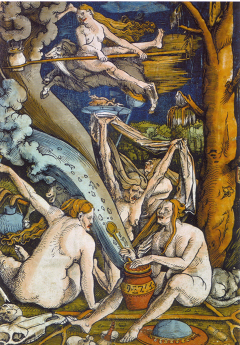
Almost nothing is known about the first person executed for witchcraft in America. Alse Young was hanged in Hartford, Connecticut, on May 26, 1647, and that single sentence exhausts nearly everything the historical record has to say about her life. The execution appears in the diary of Massachusetts Governor John Winthrop as a brief notation: "One _____ of Windsor arraigned and executed at Hartford for a witch." Even her first name is uncertain, reconstructed from Windsor land records showing that her husband John Young sold his property and left the area after her death. A daughter, Alice Young Beamon, was herself accused of witchcraft in Springfield, Massachusetts, in 1679 but acquitted. Connecticut had adopted its witchcraft statute in 1642, five years before Young's execution. The law was modeled on English precedent and mandated death for anyone who "hath or consulteth with a familiar spirit." What evidence was presented against Young is entirely lost. No trial transcript survives, and the motivations of her accusers can only be inferred from the broader pattern of witch accusations in colonial New England. The year 1647 was marked by an influenza epidemic in the Connecticut Valley that killed many settlers and their livestock. Epidemic disease frequently triggered witch hunts, as communities sought human agents to blame for otherwise inexplicable suffering. Young may have been a healer, a social outsider, or simply unlucky. Her execution was the first of roughly 80 recorded witch trials in Connecticut between 1647 and 1697, a period of judicial killing that predates the more famous Salem trials of 1692 by nearly half a century. Connecticut executed at least 11 accused witches during this span. Hartford's witch panic of 1662-63 alone produced four executions. Alse Young's hanging marks the beginning of a dark tradition in American legal history, one rooted in fear, religious absolutism, and the fragility of colonial communities confronting forces they could not explain.
May 27, 1647
379 years ago
Key Figures & Places
What Else Happened on May 27
Simeon ruled Bulgaria for thirty-four years and died in bed—a rarity for medieval emperors who usually met swords or poison. He'd forced Byzantium to pay him tr…
Tsar Simeon the Great died of heart failure, leaving behind a Bulgarian Empire that stretched from the Adriatic to the Black Sea. His death triggered a rapid de…
The Bulgarian army didn't just lose—they evaporated. King Tomislav's Croatian forces caught them in the Bosnian highlands, and what should've been a pitched bat…
The Jewish community of Mainz paid the bishop protection money to shelter them in his palace. Didn't matter. Count Emicho's crusaders broke through the walls on…
Richard III of Capua received his anointing as Prince of Capua on his deathbed, two weeks before pneumonia killed him. He was nine years old. His father had die…
Malcolm IV inherited Scotland at twelve years old, making him one of Europe's youngest reigning monarchs. His grandfather David I had just died, leaving the boy…
Talk to History
Have a conversation with historical figures who witnessed this era. Ask questions, explore perspectives, and bring history to life.