Pluto Discovered: Tombaugh Expands the Solar System
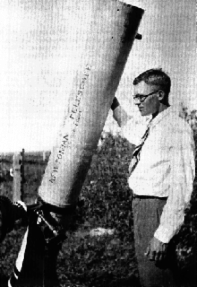
A 24-year-old Kansas farm boy without a college degree found the ninth planet by comparing two photographic plates taken six days apart. Clyde Tombaugh, working as an assistant at Lowell Observatory in Flagstaff, Arizona, discovered Pluto on February 18, 1930, vindicating astronomer Percival Lowell’s prediction that a "Planet X" lurked beyond Neptune and adding the most distant known world to the solar system. It would take 76 years and a contentious vote to take it away. Lowell had spent the last years of his life, before dying in 1916, calculating where a trans-Neptunian planet should be based on perceived irregularities in the orbits of Uranus and Neptune. The observatory he founded resumed the search in 1929, hiring Tombaugh specifically for the tedious work of photographing the sky and comparing plates for any object that moved against the background stars. Tombaugh used a blink comparator, a device that rapidly alternated between two photographs of the same star field, making any moving object appear to jump. On February 18, 1930, Tombaugh was examining plates taken on January 23 and January 29 when he spotted a tiny dot shifting position. He spent weeks verifying the discovery before Lowell Observatory announced it on March 13, 1930 — Lowell’s birthday. The name "Pluto" was suggested by Venetia Burney, an eleven-year-old English schoolgirl, because the god of the underworld seemed fitting for a cold, dark world at the edge of the solar system. The first two letters, PL, also honored Percival Lowell. Pluto was an oddity from the start. It was far smaller than expected — smaller, as later measurements revealed, than Earth’s Moon. Its orbit was eccentric and tilted, crossing inside Neptune’s orbit for twenty years of its 248-year cycle. When the International Astronomical Union voted in 2006 to reclassify Pluto as a "dwarf planet," the decision provoked public outrage that surprised astronomers. Tombaugh had died in 1997, spared the controversy. A self-taught astronomer from Kansas spent months staring at dots on photographic plates, and the dot he found became the most emotionally defended object in the solar system.
February 18, 1930
96 years ago
Key Figures & Places
What Else Happened on February 18
The Kali Yuga began as the era of spiritual decline following the departure of Krishna from the earthly realm. This transition into the final age of the Hindu c…
The Hindu calendar marks this as the moment Krishna left Earth. Kali Yuga — the age of darkness and discord — began at midnight between February 17 and 18, 3102…
Frederick II of the Holy Roman Empire recovered Jerusalem for Christendom through conversation rather than conquest, negotiating a ten-year truce with Sultan al…
Dovmont of Pskov routed the combined forces of the Livonian Order and Danish Estonia on the frozen Rakvere River. This decisive victory halted the Order’s eastw…
Dovmont of Pskov shattered the Livonian Brothers of the Sword at the Battle of Rakvere, halting their eastern expansion into Russian territories. This decisive …
Emperor Amda Seyon I launched his military campaigns into the southern Muslim provinces, aggressively expanding the Solomonic dynasty’s reach. This push consoli…
Talk to History
Have a conversation with historical figures who witnessed this era. Ask questions, explore perspectives, and bring history to life.