

Huckleberry Finn Published: Twain's American Classic
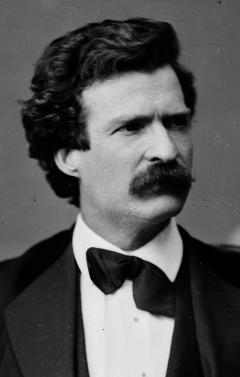
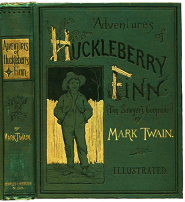
The Concord Public Library banned it immediately. Too coarse. Bad grammar. The main character was a dirty, uneducated boy who helped a runaway slave and thought he was going to hell for doing it. Mark Twain published Adventures of Huckleberry Finn in the United States on February 18, 1885, and the book has not stopped generating controversy, acclaim, and argument for a century and a half. Ernest Hemingway would later say that all modern American literature comes from this one novel. Twain had started writing Huck Finn in 1876 as a sequel to The Adventures of Tom Sawyer, but the material resisted the lighthearted tone. He put the manuscript aside for years, returning to it in bursts between 1879 and 1883. The resulting book was something entirely new in American literature: a novel written in the authentic vernacular of an uneducated boy from the antebellum South, grappling with the moral catastrophe of slavery through the consciousness of a child who has been taught that helping a slave escape is a sin. The central relationship between Huck and Jim, the runaway slave, drove the novel’s moral power. Huck has been raised in a slaveholding society and genuinely believes he is doing wrong by helping Jim. In the book’s climactic moral crisis, Huck decides he would rather go to hell than turn Jim in. "All right, then, I’ll go to hell," he says — a line that reverses the entire moral framework of the society Twain was writing about. The book was controversial from publication. Louisa May Alcott said, "If Mr. Clemens cannot think of something better to tell our pure-minded lads and lasses, he had best stop writing for them." The Concord Library committee called it "trash and suitable only for the slums." Twain, delighted by the ban, noted that it would sell an extra 25,000 copies. Modern controversy centers on the book’s extensive use of a racial slur, with schools regularly debating whether to teach, edit, or remove it. The novel that was banned for being too vulgar in 1885 is now challenged for being too offensive in the 21st century — which may be the strongest evidence that Twain wrote something that refuses to let any era feel comfortable.
February 18, 1885
141 years ago
Key Figures & Places
What Else Happened on February 18
The Kali Yuga began as the era of spiritual decline following the departure of Krishna from the earthly realm. This transition into the final age of the Hindu c…
The Hindu calendar marks this as the moment Krishna left Earth. Kali Yuga — the age of darkness and discord — began at midnight between February 17 and 18, 3102…
Frederick II of the Holy Roman Empire recovered Jerusalem for Christendom through conversation rather than conquest, negotiating a ten-year truce with Sultan al…
Dovmont of Pskov routed the combined forces of the Livonian Order and Danish Estonia on the frozen Rakvere River. This decisive victory halted the Order’s eastw…
Dovmont of Pskov shattered the Livonian Brothers of the Sword at the Battle of Rakvere, halting their eastern expansion into Russian territories. This decisive …
Emperor Amda Seyon I launched his military campaigns into the southern Muslim provinces, aggressively expanding the Solomonic dynasty’s reach. This push consoli…
Talk to History
Have a conversation with historical figures who witnessed this era. Ask questions, explore perspectives, and bring history to life.