
Victor Emmanuel Crowned King: Italian Unification
Victor Emmanuel II became King of Italy on February 18, 1861, ruling a country that did not yet include its own capital. Rome remained under papal control, guarded by French troops. Venice belonged to Austria. The kingdom that Parliament proclaimed in Turin that winter was an incomplete nation, stitched together from a patchwork of former duchies, papal states, and Bourbon territories by war, diplomacy, and the extraordinary efforts of three men who agreed on almost nothing except that Italy should exist. The unification of Italy — the Risorgimento — had been a dream of Italian intellectuals since Napoleon’s conquests briefly united the peninsula in the early 1800s. The three architects of actual unification were Count Cavour, the pragmatic Piedmontese prime minister who manipulated European great-power politics; Giuseppe Garibaldi, the revolutionary guerrilla who conquered the Kingdom of the Two Sicilies with a thousand volunteers; and Giuseppe Mazzini, the republican idealist whose vision inspired a generation. Victor Emmanuel, King of Sardinia-Piedmont, provided the constitutional monarchy around which they could all reluctantly unite. Cavour engineered a French alliance that drove Austria out of Lombardy in 1859. Garibaldi invaded Sicily in May 1860 with his Redshirts and swept through southern Italy, handing his conquests to Victor Emmanuel in a famous meeting at Teano on October 26, 1860. Plebiscites across the former Italian states voted overwhelmingly for annexation to Piedmont. On March 17, 1861, the Italian Parliament in Turin proclaimed Victor Emmanuel "King of Italy by the grace of God and the will of the nation." The new kingdom faced staggering challenges. Northern and southern Italy were economically and culturally different worlds. Illiteracy exceeded 75 percent in the south. Banditry required military suppression that killed more Italians than the wars of unification. Cavour, who might have managed the transition, died three months after unification. Rome was not incorporated until 1870, when the withdrawal of French troops during the Franco-Prussian War allowed Italian forces to breach the city walls. Italy was unified before Italians existed — as Massimo d’Azeglio reportedly said, "We have made Italy; now we must make Italians."
February 18, 1861
165 years ago
Key Figures & Places
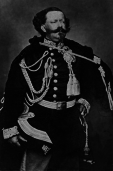
Victor Emmanuel II of Italy
Wikipedia
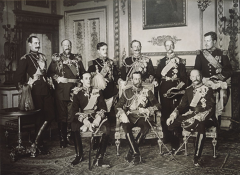
Monarch
Wikipedia
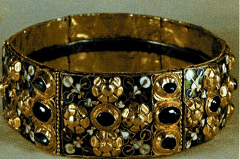
King of Italy
Wikipedia
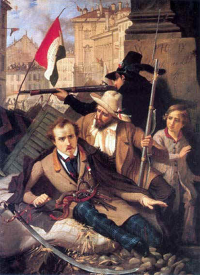
Italian unification
Wikipedia
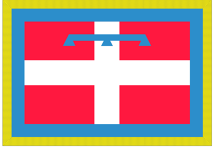
Piedmont
Wikipedia

Savoy
Wikipedia
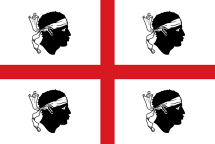
Sardinia
Wikipedia
Unification of Italy
Wikipedia
Victor Emmanuel II
Wikipedia
Piedmont
Wikipedia
Savoy
Wikipedia
Sardinia
Wikipedia
King of Italy
Wikipedia
Liste des rois d'Italie
Wikipedia
House of Savoy
Wikipedia
Italy
Wikipedia
What Else Happened on February 18
The Kali Yuga began as the era of spiritual decline following the departure of Krishna from the earthly realm. This transition into the final age of the Hindu c…
The Hindu calendar marks this as the moment Krishna left Earth. Kali Yuga — the age of darkness and discord — began at midnight between February 17 and 18, 3102…
Frederick II of the Holy Roman Empire recovered Jerusalem for Christendom through conversation rather than conquest, negotiating a ten-year truce with Sultan al…
Dovmont of Pskov routed the combined forces of the Livonian Order and Danish Estonia on the frozen Rakvere River. This decisive victory halted the Order’s eastw…
Dovmont of Pskov shattered the Livonian Brothers of the Sword at the Battle of Rakvere, halting their eastern expansion into Russian territories. This decisive …
Emperor Amda Seyon I launched his military campaigns into the southern Muslim provinces, aggressively expanding the Solomonic dynasty’s reach. This push consoli…
Talk to History
Have a conversation with historical figures who witnessed this era. Ask questions, explore perspectives, and bring history to life.