Jefferson Davis Inaugurated: The Confederacy Begins
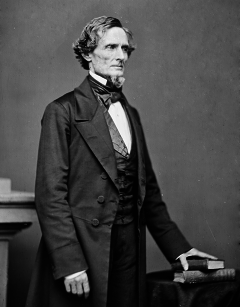
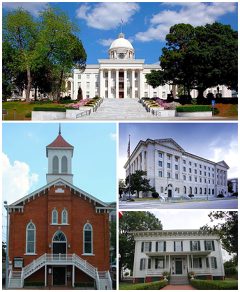
Six weeks before Abraham Lincoln took the oath of office in Washington, another president was inaugurated on the steps of the Alabama State Capitol in Montgomery. Jefferson Davis became the provisional president of the Confederate States of America on February 18, 1861, leading a nation of seven states (soon to be eleven) that existed for the sole purpose of preserving the institution of slavery. The two inaugurations, separated by just sixteen days and 700 miles, marked the beginning of the deadliest conflict in American history. Davis was not the Confederacy’s first choice. Southern fire-eaters wanted a radical who had been calling for secession for years. Davis was a moderate by Confederate standards — a Mississippi senator, former Secretary of War, and West Point graduate who had argued for Southern rights within the Union until compromise became impossible. He accepted the presidency reluctantly, reportedly telling his wife Varina that the news "was as a sentence of death." The inauguration drew a crowd of several thousand to Montgomery. Davis arrived by train from his Mississippi plantation, greeted by cheering crowds at every stop. His inaugural address, delivered without notes, struck a defensive tone: the Confederacy sought only to be "left alone" and would pursue peaceful relations with the United States. He made no mention of slavery, framing secession as a constitutional exercise of states’ rights. The Confederate Constitution he would swear to uphold, however, explicitly protected the right to own slaves in its text. Davis proved to be a capable but contentious wartime leader. He micromanaged military strategy, quarreled with his generals (except Robert E. Lee), and struggled to impose central authority on states that had seceded precisely to escape it. The Confederacy’s structural contradictions — a central government built by states’ rights advocates — hampered the war effort throughout. The government Davis led that February afternoon in Montgomery lasted exactly four years before Lee’s surrender at Appomattox, making the Confederacy one of the shortest-lived nations in modern history and its president a symbol of a cause that cost 750,000 lives.
February 18, 1861
165 years ago
Key Figures & Places

What Else Happened on February 18
The Kali Yuga began as the era of spiritual decline following the departure of Krishna from the earthly realm. This transition into the final age of the Hindu c…
The Hindu calendar marks this as the moment Krishna left Earth. Kali Yuga — the age of darkness and discord — began at midnight between February 17 and 18, 3102…
Frederick II of the Holy Roman Empire recovered Jerusalem for Christendom through conversation rather than conquest, negotiating a ten-year truce with Sultan al…
Dovmont of Pskov routed the combined forces of the Livonian Order and Danish Estonia on the frozen Rakvere River. This decisive victory halted the Order’s eastw…
Dovmont of Pskov shattered the Livonian Brothers of the Sword at the Battle of Rakvere, halting their eastern expansion into Russian territories. This decisive …
Emperor Amda Seyon I launched his military campaigns into the southern Muslim provinces, aggressively expanding the Solomonic dynasty’s reach. This push consoli…
Talk to History
Have a conversation with historical figures who witnessed this era. Ask questions, explore perspectives, and bring history to life.