

Nixon Orders the Space Shuttle: America's Next Giant Leap
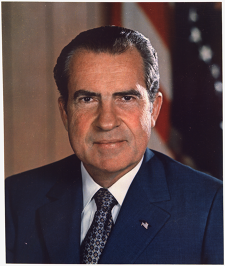
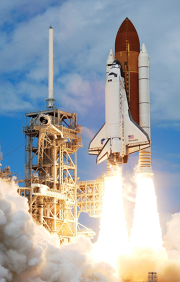
Nixon didn't want to build the Space Shuttle. He wanted to kill the space program. After Apollo 11, NASA had laid out plans for a permanent moon base, a space station, and a crewed mission to Mars by 1981. Nixon's budget office said no to all of it. What survived was the shuttle — the cheapest option, barely. Nixon approved it on January 5, 1972, framing it as routine transportation to orbit. NASA promised it would fly 50 times a year. It averaged five. They promised it would cost $118 million per flight. It averaged $1.5 billion. But it flew 135 missions over 30 years, launched the Hubble Space Telescope, and built the International Space Station. The program Nixon reluctantly approved outlasted his presidency by three decades.
January 5, 1972
54 years ago
Key Figures & Places


What Else Happened on January 5
Felix I. wird als Nachfolger von Dionysius zum Bischof von Rom gewählt.
Edward the Confessor died January 5, 1066 without an heir. Three men claimed the throne within months: Harold Godwinson, Harald Hardrada of Norway, William of N…
traité de Paris mettant fin au conflit opposant la Savoie à la France, au Dauphiné et au Faucigny.
se firma el Tratado de París.
Charles the Bold spent his reign building Burgundy into something between a kingdom and an empire — richer than France, more powerful than most actual monarchie…
Charles the Bold fell at the Battle of Nancy and Burgundy fell with him. His body was found frozen in a pond, face down, three days after the battle. Without an…
Talk to History
Have a conversation with historical figures who witnessed this era. Ask questions, explore perspectives, and bring history to life.