Buttonwood Agreement Signed: Wall Street Is Born
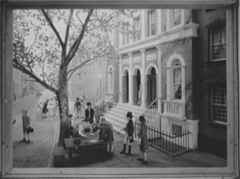
Twenty-four stockbrokers and merchants gathered beneath a buttonwood tree at 68 Wall Street on May 17, 1792, and signed a two-sentence agreement that created the institution now known as the New York Stock Exchange. The Buttonwood Agreement established two rules: the signers would trade securities only among themselves, and they would charge a minimum commission of 0.25 percent. That was the entire document. No bylaws, no board of directors, no regulatory framework. The agreement was a direct response to the financial panic of March 1792, triggered by the speculative schemes of William Duer, Alexander Hamilton's former assistant at the Treasury Department. Duer had attempted to corner the market in bank stocks and government securities, borrowing heavily to finance his purchases. When his scheme collapsed, it dragged down investors throughout New York and caused a credit crunch that paralyzed commerce for weeks. The brokers who signed the Buttonwood Agreement wanted to create an orderly, reliable marketplace that would prevent the kind of chaos Duer had caused. By agreeing to trade only with each other, they established a closed system where members could vouch for each other's creditworthiness. The minimum commission ensured that no broker would undercut the others, maintaining profitability for all participants. The arrangement was, in modern terms, a cartel. The buttonwood traders moved indoors to the Tontine Coffee House in 1793 and formally organized as the New York Stock and Exchange Board in 1817. The institution grew alongside the American economy, financing canals, railroads, and industrial corporations through the nineteenth century. By the early twentieth century, the New York Stock Exchange was the largest securities market in the world. The fixed commission system that began under the buttonwood tree lasted until 1975, when the SEC forced the exchange to allow negotiated rates. The two-sentence agreement of 1792 had spawned a $30 trillion marketplace.
May 17, 1792
234 years ago
Key Figures & Places

What Else Happened on May 17
Mircea the Elder’s Wallachian forces ambushed the Ottoman army at the Battle of Rovine, repelling Sultan Bayezid I’s superior numbers through clever use of terr…
Napoleon Bonaparte formally annexed the Papal States into his French Empire, stripping the Pope of his temporal power and secular lands. This aggressive move tr…
The axe fell on England's richest nobleman because he owned a surveyor's map. Edward Stafford, 3rd Duke of Buckingham, kept detailed charts of his Welsh estates…
Four men walked out of the Florida wilderness in 1536. They'd started as 600 under Pánfilo de Narváez nine years earlier, sailing from Spain with armor, horses,…
George Boleyn and four associates met the executioner’s blade on Tower Hill after being convicted of treason and adultery with Queen Anne Boleyn. This brutal pu…
The marriage that broke England from Rome lasted just three years before Henry annulled it on the same grounds he'd used against Catherine: he'd sinned by marry…
Talk to History
Have a conversation with historical figures who witnessed this era. Ask questions, explore perspectives, and bring history to life.