

Battle of Frankenhausen: Peasant Revolt Crushed, 6,000 Killed
Princely armies annihilated the peasant forces at Frankenhausen, capturing radical preacher Thomas Muntzer and crushing the largest popular uprising in German history. The defeat killed an estimated 6,000 rebels in a single afternoon and ended the German Peasants' War, ensuring that feudal lords maintained control over land and labor for another three centuries.
May 15, 1525
501 years ago
Key Figures & Places
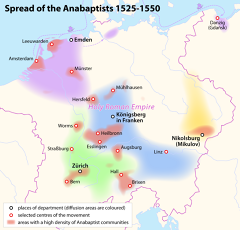
Anabaptist
Wikipedia
Holy Roman Empire
Wikipedia

battle of Frankenhausen
Wikipedia
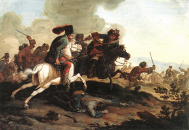
insurgents
Wikipedia

Thomas Müntzer
Wikipedia
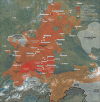
German Peasants' War
Wikipedia

Insurgency
Wikipedia
Anabaptism
Wikipedia

Thomas Müntzer
Wikipedia

Battle of Frankenhausen
Wikipedia

German Peasants' War
Wikipedia

Holy Roman Empire
Wikipedia

1489
Wikipedia
What Else Happened on May 15
The Roman people handed their biggest insult to the senate by letting a centurion dedicate a temple instead of a consul. Marcus Laetorius, a senior military off…
Liu Bei declared himself emperor of Shu Han, formally claiming the mantle of the fallen Han dynasty to challenge the legitimacy of his rivals. This act fracture…
The twenty-one-year-old emperor was found hanging in his bedroom at Vienne, but nobody believed it was suicide. Valentinian II had just ordered his general Arbo…
The Lombard king married a Catholic princess from Bavaria, and she didn't even have to convert him—she converted his entire kingdom instead. Theodelinda brought…
Papst Gregor II. beauftragt den Priester Wynfreth mit christlicher Missionsarbeit in Germanien, um „ungläubigen Völkern das Geheimnis des Glaubens bekannt zu ma…
He swam across the Euphrates to escape the assassins who'd already killed ninety of his relatives. Abd al-Rahman I had watched the Abbasid caliphate butcher his…
Talk to History
Have a conversation with historical figures who witnessed this era. Ask questions, explore perspectives, and bring history to life.