

Chechen Ambush: Resistance Ignites Second Chechen War
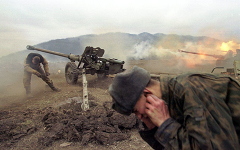
Chechen fighters struck a Russian military convoy in Ingushetia on May 11, 2000, demonstrating that the insurgency had spread well beyond Chechnya's borders. The ambush killed dozens of Russian servicemen in a carefully planned attack that exploited the mountainous terrain along supply routes feeding the occupation forces in Grozny. Federal commanders had declared major combat operations over just weeks earlier. The Second Chechen War had begun in August 1999 after a series of apartment bombings in Russian cities killed nearly 300 civilians. Moscow blamed Chechen militants, and newly appointed Prime Minister Vladimir Putin ordered a massive military intervention that proved central to his rise to political dominance. Russian forces leveled Grozny with artillery and airstrikes, reducing the capital to ruins that the United Nations called the most destroyed city on Earth. This particular ambush exposed the gap between Moscow's official narrative of a completed military victory and the reality on the ground. Russian troops controlled cities and major roads during daylight but faced constant guerrilla attacks on their supply lines. The fighters used knowledge of local terrain, sympathetic villages, and cross-border movement to strike and vanish before Russian reinforcements arrived. The conflict ground on for years, evolving from conventional warfare into a brutal counterinsurgency marked by human rights abuses on both sides. Chechen resistance fragmented, with some factions turning toward radical Islamism and carrying out devastating terrorist attacks including the Beslan school siege in 2004. Putin used the war to consolidate power, restrict press freedom, and establish the security-state apparatus that defined Russian governance for the next two decades.
May 11, 2000
26 years ago
Key Figures & Places




What Else Happened on May 11
Max Hödel fired two shots at Kaiser Wilhelm I on the streets of Berlin, missing the monarch entirely. This failed assassination attempt provided Chancellor Otto…

Emperor Constantine stood on a promontory where Europe meets Asia and declared this ancient fishing village the new center of the Roman world. On May 11, 330 AD…
Constantine the Great inaugurated his rebuilt city of Byzantium as New Rome, shifting the imperial center of gravity from the Tiber to the Bosphorus. By establi…
The woodblocks took months to carve, each character cut in reverse by hand. Wang Jie paid for the whole thing—a 16-foot scroll of Buddhist scripture—as a gift f…
The monk Wang Jie paid for the printing out of his own pocket, commissioning woodblock carvers to cut the entire Buddhist text in reverse — 16 feet of paper, ev…
The new Byzantine Emperor was seven years old. Alexander had spent his entire childhood as co-emperor alongside his older brother Leo VI, never expecting to ru…
Talk to History
Have a conversation with historical figures who witnessed this era. Ask questions, explore perspectives, and bring history to life.