

Armory Show Shocks America: Modern Art Arrives in NYC
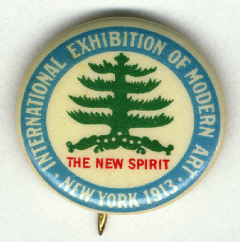
Marcel Duchamp’s Nude Descending a Staircase hung on a wall of a National Guard drill hall in Manhattan, and the American public lost its collective mind. The International Exhibition of Modern Art, better known as the Armory Show, opened on February 17, 1913, at the 69th Regiment Armory in New York City, displaying roughly 1,300 works by 300 European and American artists. Most Americans had never seen anything like Cubism, Fauvism, or Post-Impressionism. The reaction ranged from fascination to fury to mockery that made front-page news for weeks. The show was organized by the Association of American Painters and Sculptors, led by Arthur B. Davies and Walt Kuhn, who traveled to Europe in 1912 specifically to assemble a collection that would shock American audiences out of their aesthetic complacency. They succeeded beyond their wildest expectations. The European galleries, featuring works by Picasso, Matisse, Brancusi, Kandinsky, and Duchamp, drew enormous crowds and vitriolic criticism. A New York Times critic called Duchamp’s nude "an explosion in a shingle factory." Theodore Roosevelt, visiting the show, declared that his Navajo rug was better art than a Duchamp painting. The numbers were staggering for an art exhibition in 1913: approximately 87,000 people attended in New York, with additional showings in Chicago and Boston drawing tens of thousands more. The Chicago Institute ordered the removal of the blue in Matisse’s Blue Nude, and students at the Art Institute burned Matisse and Brancusi in effigy. The controversy generated more newspaper coverage than any art event in American history. But the commercial results surprised everyone. American collectors bought dozens of works. Lawyer John Quinn purchased over 30 pieces. The show introduced an entire generation of American artists to European modernism, directly influencing the development of American abstract art over the following decades. The Armory Show did not just introduce modern art to America — it forced the country to decide whether art was supposed to comfort or challenge, and the argument has never been settled.
February 17, 1913
113 years ago
Key Figures & Places



What Else Happened on February 17
Emperor Jovian died in his tent at Tyana after ruling Rome for eight months. The official cause: carbon monoxide from a brazier. The unofficial version: assassi…
Teutonic Knights clashed with the Grand Duchy of Lithuania at the Battle of Rudau, fighting to a bloody stalemate in the frozen forests of Prussia. While the kn…
Musa Celebi seized the Ottoman sultanate with military backing from Wallachia's Prince Mircea, ending years of bloody civil war among the surviving sons of Sult…
The peasants of Dithmarschen flooded their own fields the night before the battle on February 17, 1500. When Duke Friedrich of Holstein's armored knights charge…
Giordano Bruno spent seven years in an Inquisition prison before the Roman Catholic Church burned him alive at Campo de' Fiori in Rome on February 17, 1600. His…
Giordano Bruno faced the executioner’s wooden vise at Rome’s Campo de' Fiori, silencing the philosopher before he could utter another word against the Inquisiti…
Talk to History
Have a conversation with historical figures who witnessed this era. Ask questions, explore perspectives, and bring history to life.