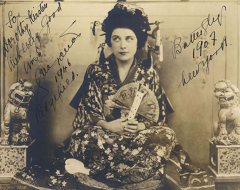
Madame Butterfly Premieres: Puccini's Tale of Betrayal
The audience at La Scala hissed, laughed, and made animal noises throughout the performance, and by the final curtain on February 17, 1904, Giacomo Puccini’s Madama Butterfly had become one of the most spectacular opening-night disasters in opera history. Rival composers had packed the house with supporters. The leading soprano’s kimono billowed in a draft, prompting shouts of "She’s pregnant!" Puccini, sitting in a box with his publisher, was devastated. He withdrew the opera the next morning and refused to let La Scala stage it again. Puccini had poured more of himself into Butterfly than any previous work. He had attended a London performance of David Belasco’s one-act play about a Japanese woman abandoned by an American naval officer and wept openly, unable to understand the English dialogue but overwhelmed by the emotion. He spent two years researching Japanese music, consulting with the wife of the Japanese ambassador, and composing a score of unusual delicacy and restraint for an Italian opera. The La Scala premiere was sabotaged from the start. Puccini’s rivals organized a claque — a paid group of audience members — to disrupt the performance. The opera’s unusual structure contributed to the hostility: the entire second act was over an hour long, and the audience’s patience ran out. The tenor Rosina Storchio, singing Cio-Cio-San, was competent but could not overcome the orchestrated disruption. Puccini returned his fee to the theater and took the score home. Three months later, Puccini staged a revised Madama Butterfly at the Teatro Grande in Brescia. He had split the long second act in two, cut several passages, and added the tenor aria "Addio, fiorito asil." The audience gave the cast six curtain calls. The opera entered the permanent repertoire and has been performed continuously for over a century, becoming one of the three or four most popular operas in the world. The masterpiece that was booed off the stage of Italy’s greatest opera house needed nothing more than a smaller theater and an audience that had come to listen rather than to destroy.
February 17, 1904
122 years ago
Key Figures & Places

What Else Happened on February 17
Emperor Jovian died in his tent at Tyana after ruling Rome for eight months. The official cause: carbon monoxide from a brazier. The unofficial version: assassi…
Teutonic Knights clashed with the Grand Duchy of Lithuania at the Battle of Rudau, fighting to a bloody stalemate in the frozen forests of Prussia. While the kn…
Musa Celebi seized the Ottoman sultanate with military backing from Wallachia's Prince Mircea, ending years of bloody civil war among the surviving sons of Sult…
The peasants of Dithmarschen flooded their own fields the night before the battle on February 17, 1500. When Duke Friedrich of Holstein's armored knights charge…
Giordano Bruno spent seven years in an Inquisition prison before the Roman Catholic Church burned him alive at Campo de' Fiori in Rome on February 17, 1600. His…
Giordano Bruno faced the executioner’s wooden vise at Rome’s Campo de' Fiori, silencing the philosopher before he could utter another word against the Inquisiti…
Talk to History
Have a conversation with historical figures who witnessed this era. Ask questions, explore perspectives, and bring history to life.