

Confederates Burn Columbia: Desperation in the South
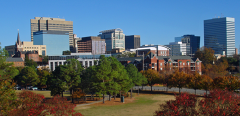
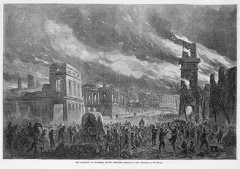
The capital of South Carolina — the first state to secede from the Union — burned to the ground on the night of February 17, 1865, and the question of who set the fires has never been definitively answered. Union General William Tecumseh Sherman’s troops entered Columbia that morning after Confederate General Wade Hampton’s retreating forces set fire to cotton bales in the streets to prevent their capture. By dawn on February 18, roughly a third of the city was in ashes. Each side blamed the other, and the truth almost certainly involves both. Sherman’s March to the Sea had already devastated Georgia, and his northward push through the Carolinas was designed to break the Confederacy’s will to fight. South Carolina, as the cradle of secession, was a particular target. Sherman’s soldiers had been marching for months with minimal resistance, and their discipline had frayed. Many viewed South Carolina as the state that started the war and felt no obligation to treat it gently. When Sherman’s troops entered Columbia on February 17, they found cotton bales burning in the streets, set alight by retreating Confederates. High winds scattered embers across the city. Union soldiers, some of whom had broken into liquor stores, began setting additional fires. Sherman later claimed his troops fought the flames rather than started them. Eyewitness accounts from Columbia’s residents told a different story: drunken soldiers torching homes, cutting fire hoses, and preventing civilians from saving their property. By morning, 458 buildings were destroyed, including the old State House, churches, businesses, and hundreds of homes. Remarkably, the new State House under construction survived, though it still bears scars from Union artillery. Columbia’s population was left largely destitute. Sherman’s army moved on within two days, continuing north toward its next objective. Columbia’s burning became the most contested atrocity of Sherman’s campaign, weaponized by both sides for decades: the South called it proof of Union barbarism, while the North blamed Confederate recklessness with the cotton fires.
February 17, 1865
161 years ago
Key Figures & Places

United States
Wikipedia

Confederate States of America
Wikipedia
Columbia, South Carolina
Wikipedia
burned
Wikipedia

Columbia, South Carolina
Wikipedia

Capture of Columbia
Wikipedia

Confederate
Wikipedia

United States
Wikipedia

Patty Hearst
Wikipedia

California
Wikipedia

Henry Kissinger
Wikipedia

Mao Zedong
Wikipedia

China
Wikipedia
1959 en astronautique
Wikipedia
Project Vanguard
Wikipedia

United States Senate
Wikipedia

Blaine Act
Wikipedia

Prohibition
Wikipedia

South Carolina
Wikipedia

American Civil War
Wikipedia

Charleston, South Carolina
Wikipedia

1776 aux États-Unis
Wikipedia

Baltimore
Wikipedia

Gaz
Wikipedia

Kangxi Emperor
Wikipedia

Vietnam
Wikipedia

Geschichte Kambodschas
Wikipedia

Sino-Vietnamese War
Wikipedia

Prohibition in the United States
Wikipedia

Twenty-first Amendment to the United States Constitution
Wikipedia
Eighteenth Amendment to the United States Constitution
Wikipedia

Newsweek
Wikipedia

Union army
Wikipedia

William Tecumseh Sherman
Wikipedia

H. L. Hunley
Wikipedia
Submarine
Wikipedia

Spierentorpedo
Wikipedia

USS Housatonic (1861)
Wikipedia

Missouri Compromise
Wikipedia

Slavery in the United States
Wikipedia

Confederate States Army
Wikipedia

Warship
Wikipedia
What Else Happened on February 17
Emperor Jovian died in his tent at Tyana after ruling Rome for eight months. The official cause: carbon monoxide from a brazier. The unofficial version: assassi…
Teutonic Knights clashed with the Grand Duchy of Lithuania at the Battle of Rudau, fighting to a bloody stalemate in the frozen forests of Prussia. While the kn…
Musa Celebi seized the Ottoman sultanate with military backing from Wallachia's Prince Mircea, ending years of bloody civil war among the surviving sons of Sult…
The peasants of Dithmarschen flooded their own fields the night before the battle on February 17, 1500. When Duke Friedrich of Holstein's armored knights charge…
Giordano Bruno spent seven years in an Inquisition prison before the Roman Catholic Church burned him alive at Campo de' Fiori in Rome on February 17, 1600. His…
Giordano Bruno faced the executioner’s wooden vise at Rome’s Campo de' Fiori, silencing the philosopher before he could utter another word against the Inquisiti…
Talk to History
Have a conversation with historical figures who witnessed this era. Ask questions, explore perspectives, and bring history to life.