

Louis XV Survives Assassination: The Knife Barely Missed
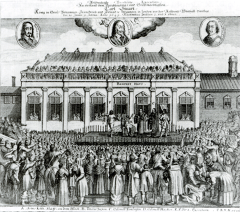
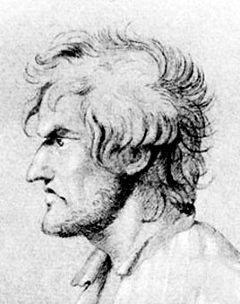
Robert-François Damiens pulled a small knife and stabbed King Louis XV in the side as the king was boarding his carriage at Versailles. The blade barely penetrated. Louis survived. Damiens didn't. He was the last person in France executed by drawing and quartering — a sentence that took hours and required five horses instead of the usual four. His arms and legs wouldn't detach. The executioner had to cut the tendons first. Twenty thousand people watched. The Paris crowd cheered when it was over, then fell silent when the body was finally torn apart. France would execute people more efficiently from then on. The guillotine came 32 years later. They called it progress.
January 5, 1757
269 years ago
Key Figures & Places
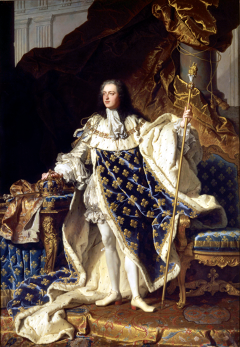
Louis XV of France
Wikipedia
Robert–François Damiens
Wikipedia
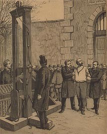
Capital punishment
Wikipedia
assassination
Wikipedia
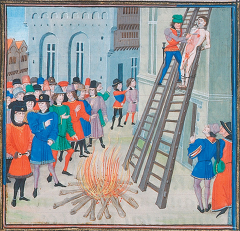
hanged, drawn and quartered
Wikipedia
Regicide
Wikipedia
Robert-François Damiens
Wikipedia

Louis XV
Wikipedia

Assassination
Wikipedia

Robert-François Damiens
Wikipedia
Capital punishment
Wikipedia

Hanged, drawn and quartered
Wikipedia

Regicide
Wikipedia

France
Wikipedia

Hamas
Wikipedia
Yahya Ayyash
Wikipedia

Bomb
Wikipedia

Mobile phone
Wikipedia

Mossad
Wikipedia

Palestine (region)
Wikipedia
What Else Happened on January 5
Felix I. wird als Nachfolger von Dionysius zum Bischof von Rom gewählt.
Edward the Confessor died January 5, 1066 without an heir. Three men claimed the throne within months: Harold Godwinson, Harald Hardrada of Norway, William of N…
traité de Paris mettant fin au conflit opposant la Savoie à la France, au Dauphiné et au Faucigny.
se firma el Tratado de París.
Charles the Bold spent his reign building Burgundy into something between a kingdom and an empire — richer than France, more powerful than most actual monarchie…
Charles the Bold fell at the Battle of Nancy and Burgundy fell with him. His body was found frozen in a pond, face down, three days after the battle. Without an…
Talk to History
Have a conversation with historical figures who witnessed this era. Ask questions, explore perspectives, and bring history to life.