The World Wide Web Goes Public: Berners-Lee Connects Humanity
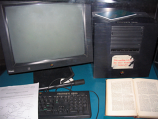
CERN released the World Wide Web into the public domain on April 30, 1993, waiving all intellectual property rights and making the technology free for anyone to use, modify, and build upon. The decision, announced by CERN's director-general, was arguably the most consequential act of technological generosity in modern history. Tim Berners-Lee, the British physicist who invented the Web in 1989, had designed it as a system for sharing research documents among physicists at CERN's Geneva laboratory. Making it free ensured that no corporation or government could control access to the platform that would reshape virtually every aspect of human life within a decade. Berners-Lee's original proposal, submitted to his supervisor Mike Sendall in March 1989, was titled "Information Management: A Proposal." Sendall's handwritten comment on the cover was "Vague but exciting." The system combined three existing technologies: hypertext, which allowed documents to link to one another; the internet, which connected computers globally; and a standardized addressing system (URLs) that gave every document a unique, findable location. The first web server ran on a NeXT computer at CERN, with a handwritten note taped to the case: "This machine is a server. DO NOT POWER IT DOWN!!" By April 1993, the Web was still a niche tool used primarily by physicists and computer scientists. Fewer than 130 websites existed worldwide. What transformed the Web from an academic curiosity into a mass medium was the combination of CERN's free release and the development of the Mosaic web browser at the University of Illinois, which launched the same year and provided the first user-friendly graphical interface for browsing. Mosaic's creators went on to found Netscape, triggering the browser wars and the dot-com boom of the late 1990s. The decision to make the Web free was not inevitable. CERN could have licensed the technology, as Xerox had done with the graphical user interface and as many universities do with their patents. Berners-Lee, who has never earned royalties from his invention, has consistently argued that the Web's value depends on its universality, and that any attempt to control or charge for access would have fragmented it into competing proprietary systems. His judgment has been vindicated by the Web's growth from 130 sites in 1993 to nearly 2 billion today, connecting over 5 billion people and generating trillions of dollars in economic activity annually.
April 30, 1993
33 years ago
Key Figures & Places
What Else Happened on April 30
A dying emperor signed a death warrant for himself by sparing Christians. In 311, Galerius, who'd burned churches and sold confiscated goods, finally ordered al…
Licinius crushed the forces of Maximinus II at the Battle of Tzirallum, securing his sole authority over the Eastern Roman Empire. This victory ended the tetrar…
Licinius defeated the forces of Maximinus Daza at the Battle of Tzirallum, consolidating his absolute control over the Eastern Roman Empire. This victory ended …
A bishop's hand trembled as he anointed Chindasuinth in Toledo, 642. The nobility didn't cheer; they traded chaos for a crown that demanded blood. He'd later fo…
Observers across the globe witnessed a brilliant new star erupt in the constellation Lupus, outshining the moon for months. This celestial explosion, now known …
A rope snapped, sending the King's former chancellor swinging wildly from Montfaucon's gallows while Paris watched in stunned silence. Enguerrand de Marigny, wh…
Talk to History
Have a conversation with historical figures who witnessed this era. Ask questions, explore perspectives, and bring history to life.