
France Declares War: The Revolutionary Wars Begin
The French National Assembly voted to declare war on the Habsburg King of Bohemia and Hungary on April 20, 1792, launching a conflict that would engulf Europe for the next twenty-three years. The declaration, passed with near-unanimous enthusiasm, reflected a revolutionary government drunk on its own rhetoric, convinced that the peoples of Europe would rise up to join France's crusade for liberty. Instead, the war nearly destroyed the revolution, consumed millions of lives, and eventually produced Napoleon Bonaparte. The immediate cause was Austrian and Prussian hostility toward revolutionary France. Emperor Leopold II and King Frederick William II had issued the Declaration of Pillnitz in August 1791, threatening intervention if the French royal family were harmed. French emigres, including aristocrats and army officers who had fled the revolution, lobbied openly for foreign invasion. The Girondins, the dominant faction in the Assembly, pushed for war partly to export the revolution and partly to expose Louis XVI as a traitor, calculating that he would be forced to choose between France and his Austrian-born wife's relatives. Louis XVI, for his part, secretly wanted the war too. He believed the French army, weakened by the emigration of its officer corps, would lose quickly, and that Austrian and Prussian troops would restore his authority. Both sides miscalculated. The initial French campaigns were disasters, with poorly led armies retreating in panic. But the threat of invasion radicalized the revolution. The storming of the Tuileries in August, the September Massacres, the abolition of the monarchy, and the execution of Louis XVI in January 1793 all followed from the pressures the war created. The conflict expanded steadily. Britain, Spain, the Netherlands, and most of the Italian states joined the coalition against France. French revolutionary armies, reorganized and supplied by mass conscription under the levee en masse, won stunning victories and conquered Belgium, the Rhineland, and northern Italy. The wars that began with the Assembly's vote on April 20, 1792, did not end until Waterloo in 1815. By then, an estimated five million people had died, borders across Europe had been redrawn, and the modern era of mass warfare and nationalist politics had arrived.
April 20, 1792
234 years ago
Key Figures & Places
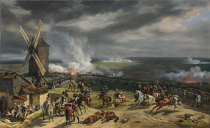
French Revolutionary Wars
Wikipedia
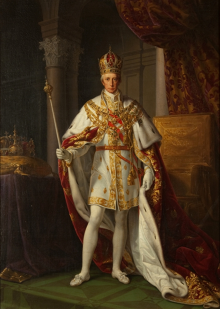
Francis II, Holy Roman Emperor
Wikipedia
Francis II, Holy Roman Emperor
Wikipedia
French Revolutionary Wars
Wikipedia
Déclaration de guerre de la France au roi de Bohême et de Hongrie
Wikipedia
Prussia
Wikipedia
France
Wikipedia
16 de febrero
Wikipedia
Austrian Empire
Wikipedia
Crimean War
Wikipedia
National Assembly (France)
Wikipedia
Geschichte Österreichs
Wikipedia
Piedmont
Wikipedia
War of the First Coalition
Wikipedia
Austria
Wikipedia
What Else Happened on April 20
A mother and son fought over Jerusalem, not for glory, but for who held the reins of power. For eight years, Baldwin III and Queen Melisende clashed, tearing th…
Pope Boniface VIII issued the papal bull In Supremae Praeminentia Dignitatis to establish the Sapienza University of Rome. By centralizing ecclesiastical educat…
Three Genoese galleys smashed through the massive Ottoman blockade to deliver vital supplies and reinforcements to Constantinople. This tactical victory briefly…
Jacques Cartier departed Saint-Malo with two ships, sailing across the Atlantic to map the Gulf of St. Lawrence. By claiming these lands for France, he initiate…
A ghostly halo split the sky over Stockholm, three suns burning where only one should be. The crowd didn't just stare; they panicked, convinced the apocalypse h…
He kicked the door open, grabbed his hat, and told them to pack their bags. Cromwell didn't just dissolve the Rump Parliament; he dragged away the few MPs who s…
Talk to History
Have a conversation with historical figures who witnessed this era. Ask questions, explore perspectives, and bring history to life.