
Luther Stands Firm: Diet of Worms Ignites the Reformation
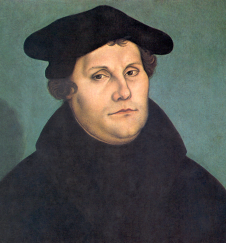
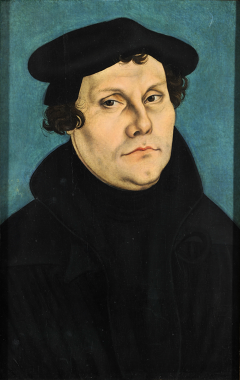
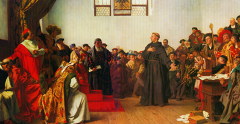
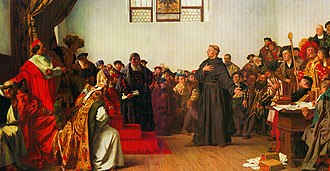
Martin Luther stood before the Diet of Worms on April 17, 1521, and refused to recant a single word. "Unless I am convinced by the testimony of the Scriptures or by clear reason, I cannot and will not recant anything, since it is neither safe nor right to go against conscience," he declared. The famous closing phrase, "Here I stand, I can do no other," was likely added by sympathetic editors, but the substance of his defiance was real. A monk from Saxony had just told the Holy Roman Emperor, the Pope's representatives, and the princes of Germany that his conscience outweighed their combined authority. The hall erupted. Spanish members of Charles V's entourage shouted "To the fire!" Luther's German supporters cheered. The Emperor, who spoke no German, needed the speech translated before he grasped what had happened. Charles V wrote his own response that evening: he would stake his kingdoms, his friends, his body, his blood, and his soul on defending the Catholic faith against this single monk. The political and religious unity of Western Christendom, already strained, began to crack apart in that room. Luther was given a safe-conduct pass that technically protected him for twenty-one days. On the road back to Wittenberg, soldiers of Elector Frederick the Wise staged a fake kidnapping and spirited Luther to Wartburg Castle, where he spent the next ten months translating the New Testament into German. The translation, published in 1522, became one of the most influential books in German history, standardizing the written language and putting scripture directly into the hands of literate laypeople for the first time. The Diet of Worms issued the Edict of Worms on May 25, 1521, declaring Luther a heretic and outlaw whose works were to be burned. But the edict could not be enforced. German princes who resented papal taxation and imperial overreach protected Luther and his followers. Within a decade, entire regions had broken from Rome. The Reformation that Luther's stand at Worms ignited would split Europe along confessional lines, fuel a century of religious wars, and produce the denominational diversity that defines Christianity today.
April 17, 1521
505 years ago
Key Figures & Places
Lutheranism
Wikipedia
Martin Luther
Wikipedia
Diet of Worms
Wikipedia
Martin Luther
Wikipedia
Lutheranism
Wikipedia
Diet of Worms
Wikipedia
Excommunication
Wikipedia
Catholic Church
Wikipedia
Worms (Alemania)
Wikipedia
Holy Roman Empire
Wikipedia
Pope Benedict XIV
Wikipedia
the view that the earth orbits the sun
Wikipedia
Charles V, Holy Roman Emperor
Wikipedia
What Else Happened on April 17
Vitellius claimed the Roman throne after his legions crushed Otho’s forces at the First Battle of Bedriacum. This victory ended the brief reign of the third emp…
A crown slipped off a dying king's head in 1080, but Harald III left behind a throne that felt like a trap for his nephew. Canute IV took over, not just to rule…
A single poisoned cup ended the Bavand rule in 1349. The ruler drank, choked, and died while his guards watched silently. Now the Afrasiyab family seized the th…
Hasan II fell to an assassin’s blade, extinguishing the Bavand dynasty’s seven-century hold over the Mazandaran region. This power vacuum allowed the rival Afra…
Teutonic knights breached the walls of Kaunas Castle after a brutal month-long siege, capturing the Lithuanian stronghold and seizing its commander, Vaidotas. T…
A poet named Chaucer didn't just read to King Richard II; he gambled his reputation on a ragtag group of pilgrims in 1397. While the court dined, Chaucer introd…
Talk to History
Have a conversation with historical figures who witnessed this era. Ask questions, explore perspectives, and bring history to life.