

Singapore Surrenders: Britain's Greatest Defeat
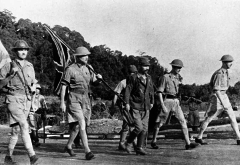
Winston Churchill called it "the worst disaster and largest capitulation in British history." On February 15, 1942, Lieutenant General Arthur Percival surrendered Singapore to the Japanese, handing over approximately 80,000 British, Australian, Indian, and local troops to an attacking force roughly half that size. The fortress that was supposed to be impregnable fell in just one week of fighting, shattering the myth of European military superiority in Asia and accelerating the end of the British Empire. Singapore was the cornerstone of British strategy in the Pacific. A massive naval base had been built at enormous expense throughout the 1920s and 1930s, with heavy coastal guns pointed seaward to repel any naval attack. The assumption was that no army could advance through the dense jungle of the Malay Peninsula from the north. Lieutenant General Tomoyuki Yamashita proved the assumption catastrophically wrong. Yamashita’s 36,000 troops invaded northern Malaya on December 8, 1941, the same day as Pearl Harbor. Using bicycles to move quickly through jungle terrain that the British had deemed impassable, Japanese forces advanced 600 miles down the peninsula in 70 days, repeatedly outflanking and surrounding British defensive positions. When they reached the Johor Strait separating Malaya from Singapore, they crossed in small boats on February 8 and attacked the island’s weak northern defenses. Percival’s garrison outnumbered the attackers but was demoralized, poorly led, and running low on water after Japanese forces captured the island’s reservoirs. Yamashita, who was actually bluffing about his own strength and ammunition supply, demanded unconditional surrender. Percival complied on February 15, leading his officers to the Ford Motor Factory in Bukit Timah with a Union Jack and a white flag. The resulting captivity was brutal: thousands of prisoners died building the Burma Railway and in Japanese prison camps. Singapore’s fall proved that colonial empires built on racial assumptions of superiority could be dismantled in days by an enemy who refused to accept those assumptions.
February 15, 1942
84 years ago
Key Figures & Places

United Kingdom
Wikipedia

Australia
Wikipedia
World War II
Wikipedia
General
Wikipedia

Empire of Japan
Wikipedia
prisoners of war
Wikipedia
Fall of Singapore
Wikipedia
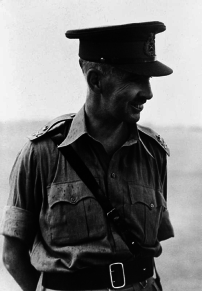
Arthur Percival
Wikipedia
British Indian Army
Wikipedia
Armed Forces of the United Kingdom
Wikipedia
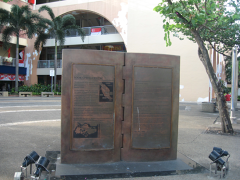
Sook Ching massacre
Wikipedia

World War II
Wikipedia

Fall of Singapore
Wikipedia

Japanese
Wikipedia

Arthur Percival
Wikipedia

British Indian Army
Wikipedia

Prisoner of war
Wikipedia

Singapore
Wikipedia

1942
Wikipedia

Pacific War
Wikipedia

Geschichte Japans
Wikipedia
Alceu Pires
Wikipedia
Diane Sherbloom
Wikipedia
Ila Ray Hadley
Wikipedia
Roger Campbell
Wikipedia
William Hickox
Wikipedia

Japan
Wikipedia

British
Wikipedia

آمي كوشيميزو
Wikipedia
What Else Happened on February 15
Emperor Theodosius II officially promulgated the Codex Theodosianus, consolidating centuries of Roman imperial edicts into a single, authoritative legal framewo…
Khosrau II took the Sassanid Persian throne at the age of twenty-three after his father Hormizd IV was murdered in a palace coup in 590 AD. He would spend the n…

Emperor Justinian II dragged his two predecessors into the Hippodrome of Constantinople in 706, forced them to lie prostrate beneath his feet while he watched t…
Arduin of Ivrea became King of Italy because the German emperor couldn't be bothered to show up. Otto III had died suddenly at 21, leaving no heir, and Italy's …
The Knights Hospitaller started as innkeepers. They ran a hospital in Jerusalem for sick pilgrims — actual healthcare, beds, soup. Then the Crusades happened an…
King John of England landed an invasion force at La Rochelle to reclaim territories lost to Philip II of France, opening the southern front of the Anglo-French …
Talk to History
Have a conversation with historical figures who witnessed this era. Ask questions, explore perspectives, and bring history to life.