Superconductivity Discovered: Zero Resistance, Infinite Possibility
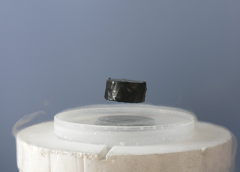
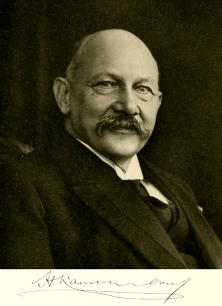
Heike Kamerlingh Onnes watched electrical resistance vanish completely in a mercury wire cooled to 4.2 Kelvin on April 8, 1911, in his laboratory at the University of Leiden. The result was so unexpected that Onnes initially suspected an equipment malfunction. He repeated the experiment, obtained the same result, and realized he had discovered something that classical physics could not explain: a state of matter in which electrical current flows without any resistance at all. He called it "supraconductivity," later shortened to superconductivity. Onnes was uniquely positioned to make this discovery because he had spent years developing the world's most advanced cryogenic laboratory. In 1908, he had become the first person to liquefy helium, reaching temperatures within a few degrees of absolute zero. This capability, which no other laboratory in the world could replicate at the time, allowed him to test how materials behaved at temperatures where quantum mechanical effects dominated. His decision to measure mercury's resistance at liquid helium temperatures was systematic rather than inspired; he was simply working through a list of elements. The implications were profound but the explanation was elusive. Normal electrical conductors lose resistance gradually as they cool, but even at absolute zero, impurities and lattice defects prevent resistance from reaching exactly zero. Superconductors behave differently: resistance drops abruptly to zero at a specific critical temperature, and current flowing through a superconducting loop can persist indefinitely. The Meissner effect, discovered in 1933, showed that superconductors also completely expel magnetic fields, demonstrating that superconductivity was a distinct quantum state rather than simply an extreme case of good conductivity. A theoretical explanation did not arrive until 1957, when John Bardeen, Leon Cooper, and John Robert Schrieffer published BCS theory, showing that electrons in a superconductor form paired states (Cooper pairs) that move through the crystal lattice without scattering. The theory won the 1972 Nobel Prize, one of the few cases where the explanation of a phenomenon won a separate Nobel from its discovery. The 1986 discovery of high-temperature superconductors, ceramic materials that superconduct above 90 Kelvin, opened possibilities for practical applications that Onnes could not have imagined.
April 8, 1911
115 years ago
Key Figures & Places
What Else Happened on April 8
He didn't die in battle. Caracalla fell to a lone guard named Martialis, who stabbed him near Carrhae while the emperor was answering nature's call. The Praetor…
Siddhartha Gautama sat beneath a Bodhi tree in Bodh Gaya, in what is now northeastern India, and refused to move until he understood the nature of suffering. Ac…
A six-year-old boy named Chilperic died alongside his father in the quiet town of Blaye. King Charibert II and his infant son were cut down, likely by order of …
Abbasid forces crushed Ya'qub ibn al-Layth’s Saffarid army at the Battle of Dayr al-'Aqul, forcing a chaotic retreat down the Tigris. By halting the Saffarid ad…
Walkelin squeezed into a cathedral that still smelled of wet lime and sawdust. He'd spent fifteen years forcing laborers to haul stone from quarries miles away,…
An excommunication that lasted seven years for a man who already said he agreed with the Pope. Roger II of Sicily backed Anacletus II against Innocent II, then …
Talk to History
Have a conversation with historical figures who witnessed this era. Ask questions, explore perspectives, and bring history to life.