First TV from Space: TIROS-1 Revolutionizes Global View
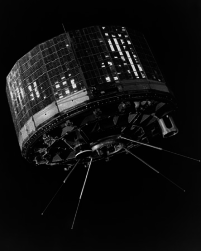
A 270-pound satellite carrying two miniature television cameras changed how humanity understood its own planet. TIROS-1 transmitted the first television picture from space on April 1, 1960, revealing cloud patterns across the Earth's surface with a clarity that no weather balloon or aircraft could match. Before that image, meteorologists were essentially blind to the global weather system they were trying to predict. Weather forecasting in 1960 relied on scattered ground stations, ship reports, and the occasional high-altitude balloon. Vast stretches of ocean and the Southern Hemisphere had almost no coverage. Hurricanes could form and strengthen without warning, and the structure of major storm systems was understood only in fragments. TIROS-1 changed the equation by providing continuous overhead imagery of cloud formations across thousands of miles. During its 78-day operational life, TIROS-1 transmitted 22,952 photographs. Meteorologists immediately recognized the value: for the first time, they could track the development and movement of entire weather systems from formation to dissipation. The satellite captured images of tropical storms, jet stream patterns, and frontal boundaries that confirmed theoretical models and exposed gaps in existing understanding. NASA launched nine more TIROS satellites between 1960 and 1965, each improving on its predecessor's capabilities. The program led directly to the creation of the National Operational Meteorological Satellite System and eventually to the geostationary weather satellites that now provide continuous real-time imagery. The modern GOES and NOAA satellite systems that track hurricanes, severe weather, and climate patterns are direct descendants of TIROS-1. The satellite also carried an unexpected diplomatic payload. Cloud-cover images from space belonged to no nation and respected no borders, making weather data one of the earliest areas of Cold War scientific cooperation.
April 1, 1960
66 years ago
Key Figures & Places
What Else Happened on April 1
He handed over half an empire to his friend Maximian, splitting Rome's control between East and West in 286. That wasn't just a new boss; it was a desperate gam…
A four-year-old boy named Sima Yan, later known as Emperor Jin Chengdi, succeeded his father Jin Mingdi as emperor of the Eastern Jin Dynasty on March 5, 325 AD…
Soldiers dragged Majorian from the mud of Placentia and shouted his name until the sun set. He wasn't a senator or a general's son; he was just a common soldier…
Justinian I ascended to co-emperor alongside his uncle, Justin I, securing a transition that consolidated imperial power in Constantinople. This partnership all…
She sat on the throne for exactly one day, wearing her father's crown while her mother, Empress Dowager Hu, pretended the world hadn't just exploded. In 528, Yu…
Three days of looting turned Constantinople's grand streets into a chaotic river of stolen silver and weeping merchants before Alexios I Komnenos finally took h…
Talk to History
Have a conversation with historical figures who witnessed this era. Ask questions, explore perspectives, and bring history to life.