Anesthesia Introduced: Surgery Without Pain Transforms Medicine
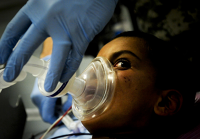
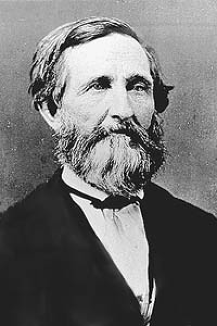
Surgery before anesthesia was a race against time and screaming. Surgeons were valued for speed, not precision, and patients who survived the operation often died of shock. On March 30, 1842, Dr. Crawford Williamson Long of Jefferson, Georgia, administered diethyl ether to a patient named James Venable and removed a tumor from his neck painlessly, performing the first surgical operation under general anesthesia. Venable paid $2.00 for the ether and $0.25 for the surgery. Long was a young country doctor who had noticed that people at "ether frolics," social gatherings where participants inhaled ether for recreation, sometimes injured themselves without feeling pain. He reasoned that the same effect could be applied to surgery. He soaked a towel in ether, held it over Venable's face until he lost consciousness, and excised the tumor. Venable felt nothing and recovered without incident. Long performed several more ether operations over the next four years but did not publish his results. He was a rural practitioner without connections to major medical institutions and apparently did not grasp the significance of what he had done. In 1846, dentist William T.G. Morton publicly demonstrated ether anesthesia at Massachusetts General Hospital in Boston, earning widespread credit for the discovery. Morton's demonstration, known as "Ether Day," launched the era of painless surgery. The priority dispute between Long, Morton, Connecticut dentist Horace Wells, and physician Charles Jackson consumed all four men. Morton went bankrupt pursuing patent claims. Wells committed suicide. Jackson died in an asylum. Long practiced medicine quietly in Georgia until his death in 1878. The state of Georgia erected a statue of Long in the U.S. Capitol's Statuary Hall, and March 30 is celebrated as Doctors' Day in the United States in recognition of his first painless operation.
March 30, 1842
184 years ago
Key Figures & Places
What Else Happened on March 30
Chinese astronomers spotted it first—a "broom star" sweeping across their sky in 240 BC. They didn't know they were tracking the same cosmic visitor that would …
The plague did what Byzantine walls couldn't. Bayan I's Avaro-Slavic army surrounded Tomis on the Black Sea coast, ready to crack open another imperial strongho…
The church bells rang for evening prayer, and the slaughter began. A French soldier harassed a Sicilian woman outside the Church of the Holy Spirit in Palermo o…
Edward I unleashed his army on Berwick-upon-Tweed, slaughtering thousands of residents and erasing the town’s status as a thriving international trading port. T…
Guru Gobind Singh transformed the Sikh community by establishing the Khalsa at Anandpur Sahib, initiating followers into a disciplined order committed to defend…
Sixth Coalition troops breached the gates of Paris, forcing the city to surrender after a brutal day of fighting. This collapse shattered Napoleon’s grip on pow…
Talk to History
Have a conversation with historical figures who witnessed this era. Ask questions, explore perspectives, and bring history to life.