

Terracotta Army Unearthed: Farmers Discover 2,000-Year-Old Soldiers
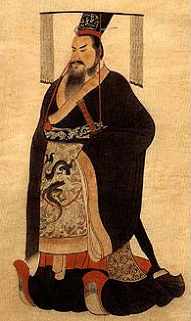
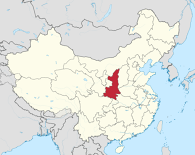
Yang Zhifa was digging a well during a drought when his shovel hit something hard. Not rock, but pottery. On March 29, 1974, farmers drilling for water near Xi'an, China, uncovered fragments of a life-sized clay warrior, the first piece of what turned out to be an army of approximately 8,000 terracotta soldiers, 130 chariots, and 670 horses buried for over two thousand years in the tomb complex of Qin Shi Huang, China's first emperor. Qin Shi Huang unified the warring states of China in 221 BC and immediately began constructing his mausoleum, a project that consumed 700,000 laborers over 38 years. The terracotta army was stationed in three massive underground pits east of the burial mound, arranged in battle formation as if guarding the emperor in the afterlife. Each soldier was individually crafted: no two faces are identical, and the figures display different hairstyles, facial expressions, and armor configurations corresponding to their military rank. The warriors stand between 5 feet 8 inches and 6 feet 5 inches tall, with officers notably taller than infantry. They originally held real bronze weapons, thousands of which were recovered during excavation, many still sharp after two millennia due to a chrome oxide coating that archaeologists did not expect to find on artifacts from 200 BC. The figures were painted in vivid colors that faded within minutes of exposure to air, a conservation disaster that delayed further excavation for years. The central tomb of Qin Shi Huang himself has never been opened. Ancient historian Sima Qian described it as containing rivers of mercury flowing through a miniature landscape of China, and modern soil testing has confirmed elevated mercury levels in the area. The terracotta army site is now one of the most visited archaeological sites in the world, drawing over 2 million visitors annually. Yang Zhifa, the farmer who found it all, spent his later years signing autographs at the museum gift shop.
March 29, 1974
52 years ago
Key Figures & Places


What Else Happened on March 29

A barbarian king did what Rome couldn't: made conquerors and conquered equal under law. Gundobad's Lex Burgundionum at Lyon didn't just allow Gallo-Romans to ke…

Ottoman forces under Sultan Murad II stormed the walls of Thessalonica on March 29, 1430, overwhelming the Venetian garrison and the remaining Byzantine defende…

Edward of York destroyed Queen Margaret's Lancastrian army at Towton on March 29, 1461, in a snowstorm that became the bloodiest battle ever fought on English s…

His father was the Pope, and that was not even the scandalous part. Rodrigo Borgia, Pope Alexander VI, handed his illegitimate son Cesare the highest military c…

The Portuguese built Brazil's first capital on a cliff 279 feet above the harbor specifically so that goods, particularly sugar, would have to be hauled up the …

England handed Quebec back to France for the price of a peace treaty. The Treaty of Saint-Germain-en-Laye, signed on March 29, 1632, restored New France to Fren…
Talk to History
Have a conversation with historical figures who witnessed this era. Ask questions, explore perspectives, and bring history to life.