Stamp Act Repealed: Victory for American Colonists
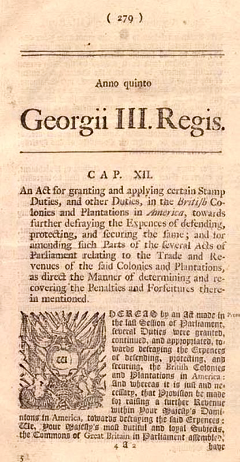
The British Parliament repealed the Stamp Act on March 18, 1766, retreating from the first direct tax ever imposed on the American colonies, but simultaneously passed the Declaratory Act asserting Parliament's right to legislate for the colonies "in all cases whatsoever." The repeal averted an immediate crisis. The Declaratory Act guaranteed a future one. The Stamp Act, passed in March 1765, required colonists to purchase stamped paper for legal documents, newspapers, pamphlets, and playing cards. The revenue was intended to help pay for British troops stationed in North America after the Seven Years' War. Parliament considered the tax modest and reasonable. The colonists considered it tyranny. The colonial response stunned British officials. Mobs attacked stamp distributors, forcing every appointed collector to resign before the act took effect on November 1, 1765. Merchants organized boycotts of British goods that caused a sharp drop in exports. The Sons of Liberty, organized resistance groups that included Samuel Adams, Patrick Henry, and other future revolutionaries, coordinated protests across colonies that had rarely cooperated on anything. The Stamp Act Congress, meeting in New York in October 1765, issued a declaration that only colonial legislatures had the right to tax colonists. British merchants, suffering from the boycott, petitioned Parliament for repeal. Benjamin Franklin testified before the House of Commons, warning that enforcing the tax would require military force and destroy the relationship between Britain and its colonies. Prime Minister Lord Rockingham, who had replaced George Grenville, pushed the repeal through Parliament while simultaneously passing the Declaratory Act to preserve the principle of parliamentary supremacy. The colonists celebrated the repeal with bonfires and toasts to the king, largely ignoring the Declaratory Act. That oversight would prove costly. Parliament used the Declaratory Act's authority to pass the Townshend Acts in 1767 and the Tea Act in 1773, reigniting the conflict that the Stamp Act repeal had only postponed. Britain won the argument on paper and lost the empire.
March 18, 1766
260 years ago
Key Figures & Places
What Else Happened on March 18
The Roman Senate proclaimed Gaius Julius Caesar Augustus Germanicus emperor on March 18, 37 AD, immediately after the death of Tiberius. The twenty-four-year-ol…
The Roman Senate bypassed the late Emperor Tiberius’s will to install his grand-nephew, Caligula, as the new ruler. This swift transition ended the uncertainty …
His mother tried to bribe the soldiers with gold. It didn't work. Emperor Alexander Severus and Julia Mamaea — who'd ruled Rome through her 26-year-old son for …
Caliph Abu Bakr crushed the final major resistance of the Ridda Wars, consolidating the Arabian Peninsula under a single central authority. This victory transfo…
A massive earthquake shattered the Levant and the Arabian Peninsula, collapsing structures across a vast region and claiming up to 20,000 lives. This disaster d…
Frederick II crowned himself King of Jerusalem inside the Church of the Holy Sepulchre, securing the city through diplomacy rather than the bloodshed typical of…
Talk to History
Have a conversation with historical figures who witnessed this era. Ask questions, explore perspectives, and bring history to life.