Antony Spared: A Fatal Mistake in Caesar's Assassination
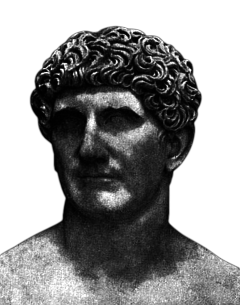
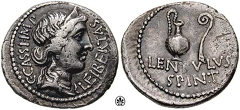
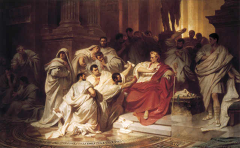
The night before they killed Julius Caesar, the conspirators nearly decided to kill Mark Antony too. On the evening of March 14, 44 BC, Gaius Cassius Longinus and Publius Servilius Casca argued that Antony, Caesar's most loyal and powerful ally, should die alongside the dictator. Leaving him alive, they warned, was leaving the revolution incomplete. Marcus Junius Brutus overruled them. Brutus insisted the assassination must appear as a principled act of tyrannicide, not a political massacre. Killing Caesar could be justified as defending the Republic from a would-be king. Killing his lieutenant would look like a coup. The conspirators needed the Senate and the Roman public on their side, and a bloodbath would turn sympathy against them. The debate exposed the fundamental tension within the conspiracy. Cassius, a hardened military commander, understood that political survival required eliminating all potential enemies. Brutus, a philosopher and idealist, believed that the righteousness of their cause would speak for itself. Decimus Junius Brutus, the third key conspirator, who was close enough to Caesar to convince him to attend the Senate the next day, appears to have sided with Marcus Brutus on the question. The decision proved catastrophic. After Caesar's assassination on the Ides of March, Antony seized control of Caesar's papers, fortune, and political legacy. He delivered a funeral oration that turned the Roman mob against the conspirators, forcing Brutus and Cassius to flee Rome within weeks. Antony formed the Second Triumvirate with Octavian and Lepidus, and their combined forces destroyed the Republican armies at the Battle of Philippi in 42 BC, where both Brutus and Cassius died. Every strategic disaster that followed for the conspirators traced back to this single decision made the night before the assassination. Cassius understood his enemy better than Brutus understood his own idealism.
March 14, 44 BC
Key Figures & Places
What Else Happened on March 14
Liu Cong, ruler of the Han Zhao state, ordered the execution of the captive Emperor Jin Huidi by poisoning him with a cup of wine. This act dismantled the Jin d…
The king lost to his own cousins in a single afternoon. At Mogyoród, Géza and Ladislaus faced Solomon—not a foreign invader, but their own blood, the crowned Ki…
The fishermen of Chioggia betrayed their mother city. In 1381, this tiny Venetian lagoon town — barely three miles from the Doge's Palace — signed a secret pact…
Catherine Cornaro ceded the sovereignty of Cyprus to the Venetian Republic, ending her reign as the island’s final monarch. By surrendering her crown, she allow…
Henry of Navarre commanded his cavalry charge at Ivry with white plumes streaming from his helmet, shouting to his outnumbered Huguenot troops: "Follow my panac…
Bavaria, Cologne, France, and Sweden signed the Truce of Ulm, forcing Bavaria out of the Thirty Years' War. This agreement crippled the Holy Roman Emperor’s mil…
Talk to History
Have a conversation with historical figures who witnessed this era. Ask questions, explore perspectives, and bring history to life.