

80 Dead at Llandow: Aviation Safety Demands Change
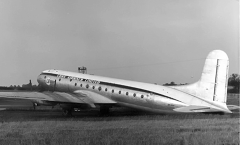
Eighty people died when a charter aircraft crashed while attempting to land at Llandow airfield near Sigingstone in the Vale of Glamorgan, Wales, on March 12, 1950. The disaster was the world's deadliest aviation accident at the time, and most of the victims were Welsh rugby supporters returning from watching Wales defeat France 21-0 in Paris the day before. The Avro Tudor V aircraft, operated by Fairflight Ltd, departed Paris-Le Bourget that Sunday carrying 78 passengers and five crew members. The flight was organized by the Welsh Rugby Union Supporters Club, and the passengers included families, couples, and groups of friends celebrating Wales's Six Nations victory. The mood aboard was reportedly jubilant. As the aircraft approached Llandow airfield at approximately 3:30 PM, witnesses on the ground noticed it flying unusually low and slow. The Tudor V stalled during its final approach, dropped sharply, and struck a field approximately half a mile short of the runway. The aircraft broke apart on impact, scattering wreckage across farmland. Three passengers initially survived the crash but one died within hours, leaving only two survivors from 83 people aboard. The subsequent investigation determined that the aircraft was flying too slowly on its approach, causing an aerodynamic stall at an altitude too low for recovery. The Tudor V aircraft type, a modified version of the Avro Tudor airliner, had already developed a troubled reputation. Two Tudor IV aircraft had disappeared over the Atlantic in 1948 and 1949, and the type was eventually withdrawn from passenger service. The Llandow disaster devastated Welsh communities. Entire families were wiped out. Several small towns lost multiple residents. Memorial services drew thousands of mourners, and the crash remained the world's worst air disaster for three years, until a U.S. Air Force transport crashed in Alaska in 1950 with 44 aboard, and later surpassed by the 1953 BOAC Comet disasters. The crash accelerated calls for stricter air safety regulations and contributed to the eventual grounding of the Tudor fleet.
March 12, 1950
76 years ago
Key Figures & Places

What Else Happened on March 12
Belisarius held Rome with just 5,000 men against an Ostrogothic army of 150,000. For over a year, Vitiges surrounded the city, cutting aqueducts and starving th…
The French monk elected pope in 1088 couldn't even enter Rome for a year — his rival already occupied the papal throne. Odo of Châtillon, who took the name Urba…
Holy Roman Emperor Friedrich I officially recognized Munich in the Augsburg arbitration, granting the settlement legal standing as a site for trade and tolls. T…
Konrad von Wallenrode assumed leadership of the Teutonic Order, inheriting a state embroiled in constant border skirmishes with the Grand Duchy of Lithuania. Hi…

Several hundred Spanish soldiers and their indigenous allies defeated a Mapuche army vastly outnumbering them at the Battle of Penco on March 12, 1550, securing…
The Spanish commander gave the city one chance to surrender before the siege. Maastricht refused. What followed was four months of hell — Alexander Farnese's 20…
Talk to History
Have a conversation with historical figures who witnessed this era. Ask questions, explore perspectives, and bring history to life.