

North Vietnam Attacks: Ban Mê Thuột Falls
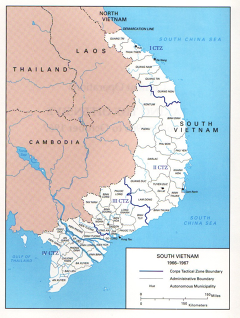
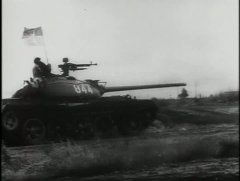
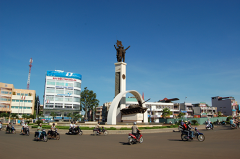
North Vietnamese forces launched a surprise attack on Ban Me Thuot, the capital of Dak Lak Province in the Central Highlands of South Vietnam, on March 10, 1975, and captured the city within 32 hours. The speed of the victory stunned both Hanoi and Saigon. Ban Me Thuot was supposed to be a limited offensive to test South Vietnamese defenses; instead, its fall triggered a chain reaction of panic and collapse that ended the war in fifty-five days. The attack was planned by General Van Tien Dung, who had replaced the ailing Vo Nguyen Giap as North Vietnam's chief military strategist. Dung assembled approximately 25,000 troops from three divisions around Ban Me Thuot while staging diversionary attacks on Pleiku and Kontum to draw South Vietnamese attention northward. The deception worked: ARVN (Army of the Republic of Vietnam) intelligence failed to detect the main force until the assault was already underway. North Vietnamese infantry and armor struck Ban Me Thuot from multiple directions at 2:00 AM on March 10. The city's ARVN garrison, the 23rd Division, was undermanned and spread thin. Tanks penetrated the city center by mid-morning. By the evening of March 11, organized resistance had collapsed. South Vietnamese reinforcements from the 21st Ranger Group were ambushed en route and destroyed. Roughly 5,000 South Vietnamese soldiers and civilians were killed or captured. The fall of Ban Me Thuot forced South Vietnamese President Nguyen Van Thieu into a disastrous decision. On March 14, he ordered a withdrawal from the Central Highlands, intending to consolidate forces for the defense of coastal lowlands. The retreat, conducted along deteriorated Route 7B, became a rout. Tens of thousands of soldiers and refugees clogged the road, harassed by North Vietnamese fire. Most of the withdrawing forces were destroyed or scattered before reaching the coast. The collapse spread northward. Hue fell on March 25. Da Nang, South Vietnam's second-largest city, was abandoned on March 30 amid scenes of chaos as soldiers and civilians fought for space on evacuation ships and aircraft. Hanoi's Politburo, realizing the South was disintegrating faster than anyone had predicted, accelerated its timetable. The Ho Chi Minh Campaign aimed at Saigon was launched in early April. North Vietnamese tanks entered the presidential palace on April 30, 1975. Ban Me Thuot was the first domino. Its fall demonstrated that the South Vietnamese military, demoralized and under-supplied after the American withdrawal, could not hold against a determined conventional offensive.
March 10, 1975
51 years ago
Key Figures & Places

South Vietnam
Wikipedia

North Vietnam
Wikipedia

Saigon
Wikipedia
Ho Chi Minh Campaign
Wikipedia
attack
Wikipedia
Ban Mê Thuột
Wikipedia

1975 spring offensive
Wikipedia

Democratic Republic of Vietnam
Wikipedia

Battle of Ban Me Thuot
Wikipedia

Ho Chi Minh City
Wikipedia

Laos
Wikipedia

Ho Chi Minh trail
Wikipedia

French Union
Wikipedia
What Else Happened on March 10

Rome's treasury was empty, its citizens were exhausted, and the First Punic War had dragged on for 23 years when a group of wealthy Romans did something extraor…
Maximian rode into Carthage celebrating victory over the Berbers, but he'd actually spent five years struggling to control tribes who knew every mountain pass a…
Liu Zhiyuan waited just sixteen days after the Khitan invaders abandoned Kaifeng before declaring himself emperor and founding the Later Han dynasty. The former…
Christopher Columbus sailed for Spain, leaving his brother Bartholomew to govern the fledgling settlement of Santo Domingo. This departure solidified the first …
The bishop ran out of wind. Fray Tomás de Berlanga was sailing from Panama to Peru in 1535 when his ship hit the doldrums — dead calm for six days straight. Oce…
The pretender won because his enemy's spiritual leader insisted on joining the battlefield. Abuna Petros II, patriarch of the Ethiopian Orthodox Church, rode al…
Talk to History
Have a conversation with historical figures who witnessed this era. Ask questions, explore perspectives, and bring history to life.