

International Women's Day: A Century of Activism
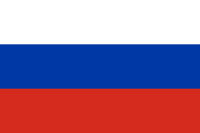
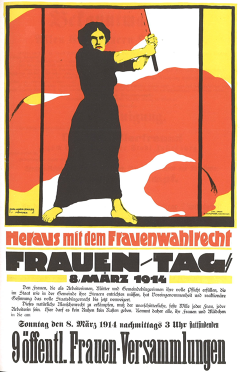
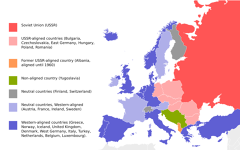
International Women's Day began as a socialist labor action and became a global observance recognized by the United Nations, though its meaning varies so dramatically by country that the same date can represent a militant demand for equality in one place and a flower-giving holiday resembling Mother's Day in another. March 8 has been observed since the early twentieth century, and its complicated history reflects the broader tensions between women's movements and the political systems that have tried to claim them. The earliest Women's Day observance was held on February 28, 1909, in New York City, organized by the Socialist Party of America to honor the 1908 garment workers' strike. In 1910, Clara Zetkin, a German socialist leader, proposed an annual International Women's Day at the Second International Socialist Women's Conference in Copenhagen. The first internationally coordinated observance took place on March 19, 1911, in Austria, Denmark, Germany, and Switzerland, with over a million people participating in rallies demanding women's suffrage, the right to hold public office, and an end to workplace discrimination. March 8 became the fixed date after the 1917 Russian Revolution, when women's demonstrations in Petrograd on that date (February 23 on the Julian calendar) helped trigger the fall of the Tsar. The Soviet Union made March 8 an official holiday, and other socialist states followed. The date spread through the communist world during the Cold War, becoming a major public holiday in the Soviet Union, China, Cuba, and Eastern Bloc countries. In the Soviet tradition, International Women's Day evolved into something closer to a celebration of femininity than a political protest. Men gave women flowers, chocolates, and gifts; workplaces held ceremonial events; and the day's revolutionary origins were largely decorative. This pattern persisted in post-Soviet Russia and across Central Asia, where March 8 remains a public holiday characterized more by gift-giving than activism. In Western Europe and the Americas, the day retained its political character. The United Nations officially recognized International Women's Day in 1977, and feminist organizations use it annually to spotlight issues including gender-based violence, the pay gap, reproductive rights, and political representation. March 8 now reaches virtually every country on Earth, though what it means depends entirely on who is observing it and what they believe women's equality requires.
March 8
Key Figures & Places
What Else Happened on March 8
Ferdowsi finished his monumental epic, the Shāhnāmeh, after thirty years of meticulous labor. By recording the myths and history of ancient Persia in pure Persi…
His mother ruled for seventeen years while nobles tried to replace her with every available man — her husband, her ex-husband, even her teenage son. But Urraca …
They entered through the latrine chute. That's how Philip II's soldiers finally breached Richard the Lionheart's supposedly impregnable fortress after six month…
The butchers and bakers won. On the frozen fields of Hausbergen, Strasbourg's shopkeepers and guild members—armed with pikes they'd forged themselves—faced down…
Duke John of Finland established the city of Pori on the banks of the Kokemäenjoki River to consolidate trade along the Gulf of Bothnia. By relocating merchants…
The Spanish explorer stumbled onto a ghost city swallowed by jungle and didn't realize he'd found one of history's greatest astronomical observatories. Diego Ga…
Talk to History
Have a conversation with historical figures who witnessed this era. Ask questions, explore perspectives, and bring history to life.