
British Bullets Fire Five: The Boston Massacre Ignites Revolution
Five colonists lay dead or dying in the snow outside the Custom House on King Street in Boston on the night of March 5, 1770, and within days, Paul Revere had produced an engraving of the scene so inflammatory, so distorted, and so widely distributed that it helped turn a local riot into a continental cause for revolution. The Boston Massacre, as it became known, killed five men and wounded six others in a confused confrontation that lasted only minutes. Tensions between Boston's civilian population and the British garrison had been building since 4,000 troops arrived in October 1768 to enforce the Townshend Acts and protect customs officials. Soldiers competed with locals for part-time jobs, fought in taverns, and represented a visible symbol of parliamentary taxation without colonial representation. On March 2, three days before the massacre, a brawl at John Gray's ropewalk between soldiers and workers left both sides looking for revenge. The evening of March 5 began with scattered confrontations across the city. A lone British sentry, Private Hugh White, was posted outside the Custom House when a crowd gathered and began taunting him. Captain Thomas Preston led a squad of eight soldiers to relieve White. The crowd pressed closer, throwing snowballs, ice chunks, and oyster shells. Someone — accounts differ on whether it was Preston or a voice from the crowd — shouted something that sounded like "Fire!" The soldiers discharged their muskets into the crowd. Crispus Attucks, a man of African and Wampanoag descent who worked as a sailor and ropemaker, was killed instantly. Samuel Gray, James Caldwell, Samuel Maverick, and Patrick Carr also died, Carr lingering for nine days. Six others were wounded. John Adams, who would become the second president, defended the soldiers at trial, arguing they had acted in self-defense. Six were acquitted; two were convicted of manslaughter and branded on their thumbs. The massacre became the revolution's first martyrs and proof, in colonial propaganda, that standing armies in peacetime were instruments of tyranny.
March 5, 1770
256 years ago
Key Figures & Places
Kingdom of Great Britain
Wikipedia
United States
Wikipedia
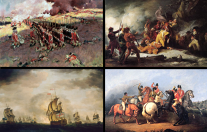
American Revolutionary War
Wikipedia
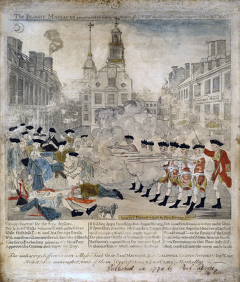
Boston Massacre
Wikipedia
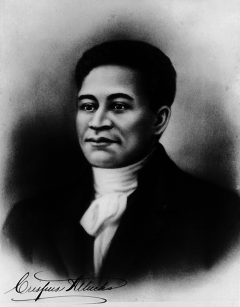
Crispus Attucks
Wikipedia
Boston Massacre
Wikipedia
Crispus Attucks
Wikipedia
American Revolutionary War
Wikipedia
Boston
Wikipedia
British Empire
Wikipedia
Kingdom of Great Britain
Wikipedia
Thirteen Colonies
Wikipedia
Americans
Wikipedia
British
Wikipedia
1723
Wikipedia
What Else Happened on March 5
Julian the Apostate brought 90,000 soldiers and a library when he marched from Antioch into Persia in March 363 AD. The last pagan Roman emperor was attempting …
Naser Khosrow was forty years old, hungover, and disgusted with himself when he decided to abandon his comfortable government career and walk across the Middle …
Grand Duke Traidenis crushed the Livonian Order at the Battle of Aizkraukle, killing the Master of the Order, Ernst von Rassau, and seventy knights. This decisi…
King Henry VII granted John Cabot and his sons royal authority to sail under the English flag in search of new lands. This expedition led to the first European …
The Vatican waited 73 years to ban Copernicus's book. Why? Because nobody thought it was serious. When *On the Revolutions of the Heavenly Spheres* appeared in …
The Catholic Church officially banned Nicolaus Copernicus’s *De revolutionibus orbium coelestium* in 1616, declaring his heliocentric model formally heretical. …
Talk to History
Have a conversation with historical figures who witnessed this era. Ask questions, explore perspectives, and bring history to life.