First Congress Convenes: US Constitution Comes to Life
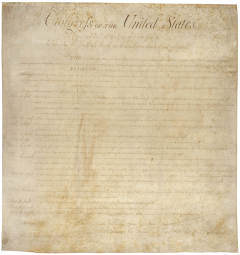
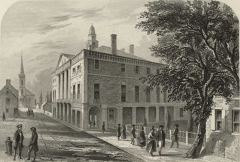
The United States Constitution existed only on paper until March 4, 1789, when the First Congress was supposed to convene in New York City's Federal Hall and bring the document to life. The problem was that almost nobody showed up. Muddy roads, winter storms, and the sheer difficulty of eighteenth-century travel meant that it took a full month to assemble a quorum — a fitting start for a government designed to move deliberately. The Constitution, ratified by the required nine states in June 1788, established the framework for a federal government but left enormous practical questions unanswered. What would the president be called? How would cabinet departments be organized? What rights needed explicit protection? The First Congress had to answer all of these questions while simultaneously inventing the procedures for answering them. Representatives and senators straggled into New York throughout March and early April. The House of Representatives achieved its quorum of 30 members on April 1; the Senate reached its quorum of 12 on April 6. They immediately began counting electoral votes and confirmed what everyone already knew: George Washington had been elected president unanimously. His inauguration was set for April 30 at Federal Hall. James Madison, a Virginia representative who had been the Constitution's principal architect, dominated the First Congress's legislative agenda. He drafted the proposed amendments to the Constitution that became the Bill of Rights, introducing twelve amendments on June 8, 1789. The states ratified ten of them by December 1791, guaranteeing freedoms of speech, religion, press, assembly, and the right to bear arms, along with protections against unreasonable searches, self-incrimination, and cruel punishment. The First Congress also created the executive departments (State, Treasury, War), established the federal judiciary through the Judiciary Act of 1789, and passed the first tariff legislation to fund the new government. Every institution of American federal government traces its operational origin to the work done by this Congress between 1789 and 1791.
March 4, 1789
237 years ago
Key Figures & Places
What Else Happened on March 4
Roman soldiers executed Adrian of Nicomedia after he converted to Christianity upon witnessing the steadfast faith of prisoners he was tasked to guard. His deat…
Claudius officially designated his stepson Nero as princeps iuventutis, signaling his status as the empire's heir apparent. This title fast-tracked the teenager…
Roman soldiers executed Adrian of Nicomedia for refusing to sacrifice to pagan gods during the Great Persecution under Emperor Diocletian. His public defiance a…
The Roman executioner couldn't do it. Adrian of Nicomedia, imperial officer in charge of torturing Christians, watched prisoners refuse to renounce their faith …
He'd just been regent for his grandson — but Yang Jian couldn't resist. The former Northern Zhou general forced the seven-year-old emperor to abdicate and crown…
The first time Croats called themselves Croats in their own language wasn't carved on a monument or proclaimed in a grand assembly. It was written on a piece of…
Talk to History
Have a conversation with historical figures who witnessed this era. Ask questions, explore perspectives, and bring history to life.