

English keyboard player and physicist (Dare)
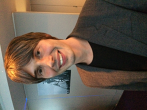
Brian Cox hit number one on the UK charts playing keyboards for D:Ream in 1994 with "Things Can Only Get Better," then left pop music to become one of the world's foremost particle physicists. Born on March 3, 1968, in Oldham, Lancashire, Cox has lived two careers that most people would consider mutually exclusive, and he's been more successful at the second one. Cox's musical career came first. He played keyboards for the band Dare in the late 1980s before joining D:Ream, a Northern Irish dance-pop group, in 1993. The band's signature track "Things Can Only Get Better" reached number one in the UK in January 1994 and was later adopted as the Labour Party's anthem for Tony Blair's landslide 1997 election victory. Cox was already studying physics at the University of Manchester while touring with the band. After D:Ream disbanded in 1997, Cox pursued physics full-time. He earned his PhD from the University of Manchester in 1998 for his work on the H1 experiment at the HERA particle accelerator in Hamburg, Germany. His research focused on elastic and diffractive scattering at high-energy proton collisions, a niche field that would lead him to CERN and the Large Hadron Collider. Cox joined the ATLAS experiment at CERN, one of two general-purpose detectors that contributed to the discovery of the Higgs boson in 2012. He held a Royal Society University Research Fellowship and became a professor at the University of Manchester. His real impact, however, came through science communication. The BBC's Wonders of the Solar System (2010) and Wonders of the Universe (2011) made him Britain's most recognizable physicist since Stephen Hawking, drawing audiences of millions with his ability to explain quantum mechanics and cosmology without condescension. Cox has been appointed an OBE for services to science, received the British Association's Lord Kelvin Award, and holds the Guinness World Record for the largest-ever science lecture, delivered to 5,000 people in Manchester in 2011. Few people have topped both the pop charts and the particle physics citation index.
March 3, 1968
58 years ago
Key Figures & Places


What Else Happened on March 3
Julien Fédon led a coalition of enslaved people and free people of color to seize the towns of Grenville and Gouyave, challenging British colonial rule in Grena…
Gundobad installed his puppet Glycerius as Western Roman Emperor, bypassing the Senate to consolidate his own military control. This maneuver exposed the total …
Empress Genshō stepped down from the Japanese throne to transfer power to her nephew, Shōmu. This transition maintained the stability of the Nara period and ens…
He'd already been patriarch twice, excommunicated twice, and now Photios was back for round three. When Emperor Basil I ratified the Fourth Council of Constanti…
Edward I didn't conquer Wales with armies alone—he conquered it with paperwork. The Statute of Rhuddlan in 1284 replaced Welsh law with English courts, sheriffs…
Emperor Akbar defeated the Bengali army at the Battle of Tukaroi on March 3, 1575, not through military genius alone but because his opponent Daud Khan Karrani …
Talk to History
Have a conversation with historical figures who witnessed this era. Ask questions, explore perspectives, and bring history to life.