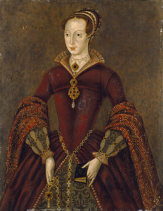
Nine-Day Queen: Lady Jane Grey Executed
She was queen for nine days and a prisoner for nine months before the executioner’s axe fell on Tower Green. Lady Jane Grey, barely sixteen years old, was beheaded on February 12, 1554, the youngest person ever executed for treason in England and the most tragic casualty of the Tudor succession wars. Jane never wanted the crown. She was the great-granddaughter of Henry VII, bookish and deeply Protestant, more interested in Greek and Hebrew than politics. But she had the misfortune of being useful. The Duke of Northumberland, who controlled the government during the final illness of the teenage King Edward VI, married Jane to his son and persuaded the dying king to name her his successor, bypassing Edward’s Catholic half-sisters Mary and Elizabeth. When Edward died on July 6, 1553, Jane was proclaimed queen. The country did not accept it. Mary Tudor rallied support in East Anglia, and within nine days the Privy Council switched its allegiance. Northumberland was arrested, tried, and executed. Jane was imprisoned in the Tower of London, where she lived in relative comfort and was initially expected to be pardoned. Mary, now queen, seemed inclined toward mercy. But Wyatt’s Rebellion in January 1554 — an uprising against Mary’s planned marriage to Philip of Spain — changed the calculus. Jane’s father joined the rebellion, and Mary’s advisors convinced her that leaving Jane alive was too dangerous. Jane was executed on the morning of February 12, 1554. She was composed, gave a brief speech forgiving all who had wronged her, blindfolded herself, and asked the executioner, "Will you take it off before I lay me down?" She could not find the block and had to be guided to it by a bystander. She was buried in the Chapel of St. Peter ad Vincula within the Tower. Jane Grey became queen because powerful men needed a puppet, and she died because other powerful men found her existence inconvenient.
February 12, 1554
472 years ago
Key Figures & Places

What Else Happened on February 12
Pope John VIII crowned Charles the Fat as Holy Roman Emperor, reuniting the fractured Carolingian Empire under a single ruler for the final time. This consolida…
Bruno of Toul walked into Rome expecting a coronation. Instead, he refused it. He wouldn't accept the papacy unless the Roman clergy and people elected him prop…
Robert of Arbrissel was preaching to prostitutes and lepers when Urban II made him found an abbey. The Pope wanted him institutionalized — literally. Robert had…
Galeazzo di Santa Sofia cut open a corpse in front of students in Vienna. Not to solve a crime. Not to determine cause of death. To teach anatomy. This was ille…
English archers and infantry barricaded themselves behind a wall of salted herring barrels to repel a combined French and Scottish assault. By successfully prot…
Sir John Fastolf circled his wagons into a fortified laager and repelled a Franco-Scottish force roughly twice his size at Rouvray on February 12, 1429, in a ba…
Talk to History
Have a conversation with historical figures who witnessed this era. Ask questions, explore perspectives, and bring history to life.