

British Parliament Votes to Stop the American War: The Revolution Won
The House of Commons voted to end the war on February 27, 1782. Not because they'd lost — Cornwallis had surrendered four months earlier, but Britain still held New York, Charleston, and Savannah. They voted to stop because it cost too much. The war was draining £20 million annually. France and Spain had joined against them. And King George III threatened to abdicate rather than accept it. Parliament chose bankruptcy over the king's pride.
February 27, 1782
244 years ago
Key Figures & Places
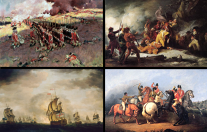
American Revolutionary War
Wikipedia
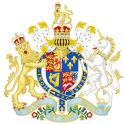
House of Commons of Great Britain
Wikipedia

House of Commons of Great Britain
Wikipedia

American Revolutionary War
Wikipedia

Battle of Moore's Creek Bridge
Wikipedia

North Carolina
Wikipedia

Loyalist (American Revolution)
Wikipedia

Patriot (American Revolution)
Wikipedia

House of Commons of the United Kingdom
Wikipedia

United States
Wikipedia

George H. W. Bush
Wikipedia

Kuwait
Wikipedia

Iraqi invasion of Kuwait
Wikipedia
What Else Happened on February 27
en China, Confucio registra el primero de una lista de 36 eclipses solares.
Emperor Theodosius I made Christianity the only legal religion of the Roman Empire on February 27, 380. Not just legal — mandatory. The Edict of Thessalonica de…

Theodosius II built the University of Constantinople in 425 because his wife told him to. Aelia Eudocia, a poet and intellectual herself, wanted a state-funded …
Nach der Rabenschlacht vor Ravenna vereinbaren Odoaker und der Ostgotenherrscher Theoderich unter Vermittlung des Erzbischofs Johannes von Ravenna einen Frieden…
Abaoji unified the disparate Khitan tribes and assumed the title of khagan, consolidating power over the vast steppes of Inner Mongolia. This centralization tra…
A nomadic warlord who couldn't read Chinese became emperor of a dynasty that would last two centuries. Abaoji unified the Khitan tribes through a mix of marriag…
Talk to History
Have a conversation with historical figures who witnessed this era. Ask questions, explore perspectives, and bring history to life.