

Insulin Discovered: Diabetes Treatment Breakthrough
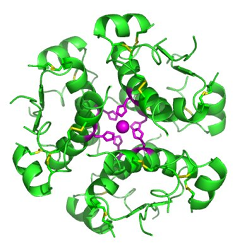
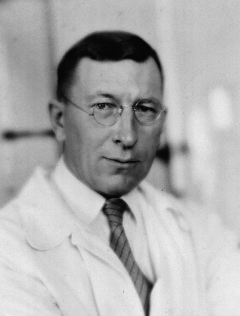
A 14-year-old boy named Leonard Thompson lay dying of diabetes in a Toronto hospital ward in January 1922. He weighed 65 pounds. His doctors had nothing to offer except a starvation diet that might extend his life by a few months. Then Frederick Banting and Charles Best injected him with a brown, murky extract derived from a dog’s pancreas, and Thompson became the first person in history to be pulled back from diabetic death. Banting was a 30-year-old failed surgeon with no research credentials when he approached J.J.R. Macleod at the University of Toronto in 1920 with an idea about isolating the internal secretion of the pancreas. Macleod was skeptical but gave Banting a lab, ten dogs, and a 22-year-old medical student named Best as an assistant. Working through the summer of 1921, the pair extracted a substance they called "isletin" — later renamed insulin — from the pancreatic tissue of dogs whose ducts had been surgically tied off. Thompson’s first injection on January 11, 1922 produced an allergic reaction and little improvement. Biochemist James Collip purified the extract, and a second injection on January 23 dropped the boy’s blood sugar dramatically with no side effects. Within weeks, an entire ward of dying children was being treated. Parents who had come to say goodbye watched their children stand up and eat. Banting and Macleod received the Nobel Prize in Physiology or Medicine in 1923 — the fastest Nobel ever awarded for a discovery. Banting sold the insulin patent to the University of Toronto for one dollar, believing that a lifesaving medicine should not be a source of profit. Pharmaceutical companies scaled production using beef and pork pancreases, and within two years insulin was available worldwide. Before insulin, a diagnosis of Type 1 diabetes was a death sentence measured in months — after it, millions of people lived full lives because two researchers in a borrowed lab refused to accept that nothing could be done.
February 11, 1869
157 years ago
Key Figures & Places


What Else Happened on February 11
Japan's founding myth places Emperor Jimmu's ascension on February 11, 660 BC. The historical problem is straightforward: there is no evidence Jimmu existed. Th…
Britannicus collapsed at a banquet table in Rome in 55 AD. He was fourteen years old, the biological son of Emperor Claudius and rightful heir to the throne. He…
Britannicus collapsed at dinner. He was 13, one day away from becoming a man under Roman law. One day away from challenging Nero for the throne. He'd been eatin…
Gordian III was 19 when his own soldiers killed him at Zaitha in Mesopotamia. He'd been emperor for six years — crowned at 13 after a military coup his family d…
Guo Wei didn't want to be emperor. He was a court official sent to suppress a rebellion when his own troops mutinied — and proclaimed him emperor instead. He re…
Robert of Chester finished translating an Arabic alchemy text in 1144. It was the first time Western Europe had access to practical chemical procedures written …
Talk to History
Have a conversation with historical figures who witnessed this era. Ask questions, explore perspectives, and bring history to life.