Jordan Soars: The Dunk That Created a Brand
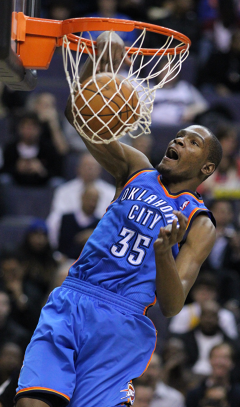
Michael Jordan took off from the free-throw line and seemed to hang in the air long enough to violate basic physics. The slam dunk he delivered during the 1988 NBA Slam Dunk Contest at Chicago Stadium on February 6 became the most iconic single play in basketball history, a moment that transcended sports and became the visual foundation of a billion-dollar brand. He scored a perfect 50 from the judges. The crowd, which included his competitor Dominique Wilkins, knew the contest was over. Jordan was twenty-four and in his fourth NBA season, already recognized as the most electrifying player in the game but still chasing his first championship. The Slam Dunk Contest was the centerpiece of All-Star Weekend, and the 1988 edition in Jordan’s home arena was framed as a showdown between Jordan and Wilkins, the Atlanta Hawks star known as the "Human Highlight Film." Wilkins delivered a series of thunderous power dunks that many observers believed should have won. The scoring was controversial, but the free-throw line dunk ended the debate in the arena. The dunk itself covered a distance of approximately fifteen feet. Jordan gathered speed from half-court, planted his left foot just behind the free-throw line, and launched into the air with the ball cocked in his right hand. His legs spread, his left arm extended for balance, and he brought the ball through the rim with enough force to make the backboard shudder. The image of his airborne silhouette, captured by photographer Jacobus Rentmeester and later reinterpreted by Nike’s designers, became the Jumpman logo. Nike had signed Jordan in 1984 for $500,000 a year, a gamble on a rookie. The Air Jordan line generated $126 million in its first year. After the free-throw line dunk, the brand became inextricable from the image of flight itself. The Jumpman logo now appears on products generating over $5 billion in annual revenue. Jordan proved that a single athletic moment, replayed and merchandised relentlessly, could become a permanent cultural symbol.
February 6, 1988
38 years ago
Key Figures & Places
What Else Happened on February 6
Julius I became pope in 337 by waiting. The previous pope died. The Roman clergy wanted Julius. But Emperor Constantius II wanted someone else — someone who'd s…
Hormizd IV lost his throne because he tried to tax the nobility and protect Christians. His brothers-in-law led the coup — Vistahm and Vinduyih, both military c…
The Vatican needed eight years to figure out who controlled the Philippines' souls. Spain claimed it. Portugal said the islands fell on their side of the Pope's…
Charles II became king of exactly one-third of his supposed realm. Six days after his father's execution, Scotland's Parliament declared him monarch. England re…
James II ascended the throne following his brother Charles II’s death, immediately sparking intense political friction by openly practicing Catholicism in a sta…
Dandara of Palmares chose death over re-enslavement after her capture, cementing her status as a defiant symbol of resistance within Brazil’s Quilombo communiti…
Talk to History
Have a conversation with historical figures who witnessed this era. Ask questions, explore perspectives, and bring history to life.