

Edgar Allan Poe Publishes The Raven: Nevermore Enters the Language
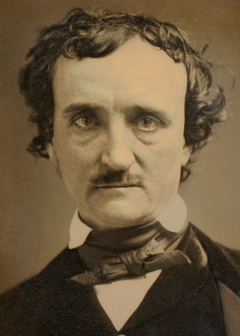
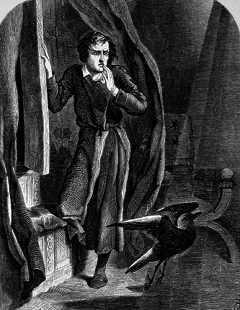
A bird. A bust. A breakdown. Edgar Allan Poe crafted the most hypnotic nervous collapse in literary history with just one word: "Nevermore." He designed the poem like a mathematical equation, mapping each stanza to maximize psychological unraveling. And the raven? A genius trick of narrative torture—perched stone-cold on Pallas, driving the narrator deeper into grief with each mechanical repetition. Poe didn't just write poetry. He engineered psychological horror, one rhyming line at a time.
January 29, 1845
181 years ago
Key Figures & Places
What Else Happened on January 29
Nach dem Tod seines Großvaters Leo I. wird Leo II. zum Kaiser des Oströmischen Reichs gekrönt. Da er noch minderjährig ist, wird sein Vater, der Isaurier Tarasi…
The bloodiest rebellion in Chinese history ended with a son's blade. An Lushan - who'd killed hundreds of thousands and nearly toppled the Tang Dynasty - was st…
Sergius III seized the papacy by force, ousting the antipope Christopher and ordering his predecessor’s execution. This violent power grab solidified the influe…
Mu'izz al-Dawla didn't just want power—he wanted to make a statement. Blinding the sitting Caliph al-Mustakfi was a brutal medieval political ritual, rendering …
en Vietnam ―en el marco de la primera invasión mongola― Đại Việt derrota a los mongoles en la batalla de Đông Bộ Đầu, obligándolos a retirarse de sus tierras.
en Londres se estrena la tragedia Romeo y Julieta, escrita por William Shakespeare.
Talk to History
Have a conversation with historical figures who witnessed this era. Ask questions, explore perspectives, and bring history to life.