

Auschwitz Liberated: Soviet Troops Find the Horror
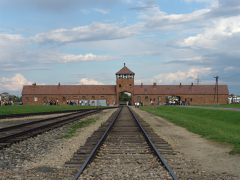
Soviet soldiers of the 322nd Rifle Division entered Auschwitz and found approximately 7,500 emaciated survivors among piles of corpses and warehouses full of victims' possessions, including 370,000 men's suits and 7.7 tonnes of human hair. The Nazis had evacuated 58,000 prisoners on death marches in the preceding weeks, and most of the camp's gas chambers and crematoria had been demolished to hide evidence. The liberation of Auschwitz revealed the full industrial scale of the Holocaust to the world.
January 27, 1945
81 years ago
Key Figures & Places
What Else Happened on January 27
Trajan ascended to the throne upon Nerva’s death, becoming the first Roman emperor from a province rather than Italy. His reign initiated the era of the Five Go…
Trajan ascended to the throne following Nerva’s death, becoming the first Roman emperor to hail from a province rather than Italy itself. His reign expanded the…
Trajan succeeded his adoptive father Nerva as Roman Emperor, beginning a nineteen-year reign that would expand the empire to its greatest territorial extent thr…
Heresy wasn't just a theological debate—it was personal. Pope Innocent I was drawing a hard line against Pelagius, a British monk who'd argued humans could achi…
The Byzantine emperor's back was against the wall. Justinian I was moments from fleeing the city, his wife Theodora — a former actress and courtesan — delivered…
Ali ibn Abi Talib was stabbed while praying in a mosque in Kufa, Iraq - the first major political assassination in Islamic history. A Kharijite radical named Ib…
Talk to History
Have a conversation with historical figures who witnessed this era. Ask questions, explore perspectives, and bring history to life.