McCarthy Ignites Red Scare: Fear Sweeps Washington
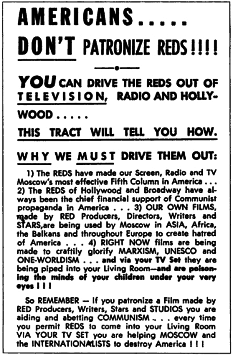
Senator Joseph McCarthy waved a piece of paper before a Republican women’s club in Wheeling, West Virginia, on February 9, 1950, and claimed it contained the names of 205 known Communists working in the State Department. The number changed within days, first to 57, then to 81, then to other figures, and McCarthy never produced the list. It did not matter. The accusation itself was enough to launch four years of political terror that ruined thousands of careers, imprisoned hundreds, and gave the English language a new word for demagogic persecution. The Second Red Scare had been building before McCarthy exploited it. The Soviet Union had detonated its first atomic bomb in August 1949, years ahead of Western estimates. China had fallen to Mao Zedong’s Communists in October. Alger Hiss, a former State Department official, had been convicted of perjury in connection with espionage charges. Julius and Ethel Rosenberg were arrested for passing nuclear secrets to the Soviets. Americans were primed to believe that Communist infiltration explained why the postwar world was not going as planned. McCarthy, a first-term Republican senator from Wisconsin with an undistinguished record, seized the moment. His Wheeling speech received national press coverage, and he parlayed the attention into a Senate subcommittee chairmanship that gave him the power to subpoena witnesses and hold televised hearings. His investigative methods relied on innuendo, guilt by association, and the destruction of anyone who challenged him. Witnesses were asked "Are you now, or have you ever been, a member of the Communist Party?" Refusal to answer was treated as confession. McCarthy’s downfall came during the Army-McCarthy hearings in 1954, when Army counsel Joseph Welch confronted him on national television with the question: "Have you no sense of decency, sir, at long last?" The Senate censured McCarthy in December 1954 by a vote of 67-22. He died of liver failure, likely related to alcoholism, in 1957 at age forty-eight. The careers he destroyed took decades to rebuild. The loyalty oaths, blacklists, and surveillance apparatus he championed persisted long after his name became an epithet.
February 9, 1950
76 years ago
Key Figures & Places

What Else Happened on February 9
Leo I needed an heir. His grandson was seven years old. So in 474, he crowned the boy's father — Zeno, an Isaurian chieftain from the mountains of southern Anat…
Bolesław I the Brave marched his forces into Bohemia to reinstall Boleslaus III as Duke, turning the region into a Polish satellite state. This intervention exp…
Bohemond of Taranto won the Battle of Antioch with an army that was starving. His Crusaders had been besieging the city for months, eating their horses, then th…
Chester's Roodee is the oldest racecourse still in use anywhere in the world. The first recorded race happened in 1539, run on a circular track around what used…
Bishop John Hooper endured three agonizing days of burning at the stake in Gloucester for refusing to renounce his Protestant convictions under Queen Mary I. Hi…
Gregory XV ascended to the papacy through acclamation, the final time the College of Cardinals bypassed a formal ballot to reach a unanimous decision. This shif…
Talk to History
Have a conversation with historical figures who witnessed this era. Ask questions, explore perspectives, and bring history to life.