Guadalcanal Secured: Japan's Pacific Expansion Halted
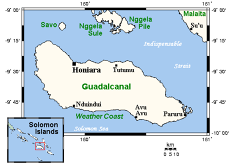
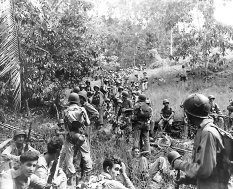
Japanese forces secretly evacuated 10,652 soldiers from Guadalcanal over three nights in early February 1943, and Allied commanders did not realize the enemy was leaving until the island was nearly empty. On February 9, American troops advancing from the west met a Marine patrol pushing from the east and found no Japanese resistance. The six-month Battle of Guadalcanal was over. Japan’s expansion in the Pacific had reached its high-water mark and was now receding. The campaign had begun on August 7, 1942, when the 1st Marine Division landed on Guadalcanal in the Solomon Islands to capture a Japanese airfield under construction. The landing was the first American ground offensive of the Pacific War, and it was almost abandoned within days when a Japanese naval force destroyed four Allied cruisers at the Battle of Savo Island, forcing the transport ships to withdraw before all supplies were unloaded. The Marines held a thin perimeter around the airfield, renamed Henderson Field, and fought off repeated Japanese counterattacks. The jungle fighting was brutal. Malaria infected virtually every American on the island. Tropical ulcers, dysentery, and fungal infections were endemic. Food ran short. The Japanese launched suicidal banzai charges across the Tenaru River and through the ridgelines around the airfield. At sea, the two navies fought a series of ferocious engagements, including the Naval Battle of Guadalcanal in November 1942, where the United States lost two admirals in a single night engagement. Both sides lost roughly twenty-four major warships during the campaign. The Japanese high command, recognizing that the attrition was unsustainable, organized Operation Ke, a nighttime evacuation by fast destroyers that extracted the surviving garrison between February 1 and 7. The soldiers who were rescued were emaciated and riddled with disease; many died shortly after evacuation. Guadalcanal cost Japan approximately 31,000 dead, including 9,000 from disease and starvation. American losses were 7,100 killed. The campaign demonstrated that Japan could be beaten on the ground and that the United States was willing to absorb the cost.
February 9, 1943
83 years ago
Key Figures & Places
What Else Happened on February 9
Leo I needed an heir. His grandson was seven years old. So in 474, he crowned the boy's father — Zeno, an Isaurian chieftain from the mountains of southern Anat…
Bolesław I the Brave marched his forces into Bohemia to reinstall Boleslaus III as Duke, turning the region into a Polish satellite state. This intervention exp…
Bohemond of Taranto won the Battle of Antioch with an army that was starving. His Crusaders had been besieging the city for months, eating their horses, then th…
Chester's Roodee is the oldest racecourse still in use anywhere in the world. The first recorded race happened in 1539, run on a circular track around what used…
Bishop John Hooper endured three agonizing days of burning at the stake in Gloucester for refusing to renounce his Protestant convictions under Queen Mary I. Hi…
Gregory XV ascended to the papacy through acclamation, the final time the College of Cardinals bypassed a formal ballot to reach a unanimous decision. This shif…
Talk to History
Have a conversation with historical figures who witnessed this era. Ask questions, explore perspectives, and bring history to life.